

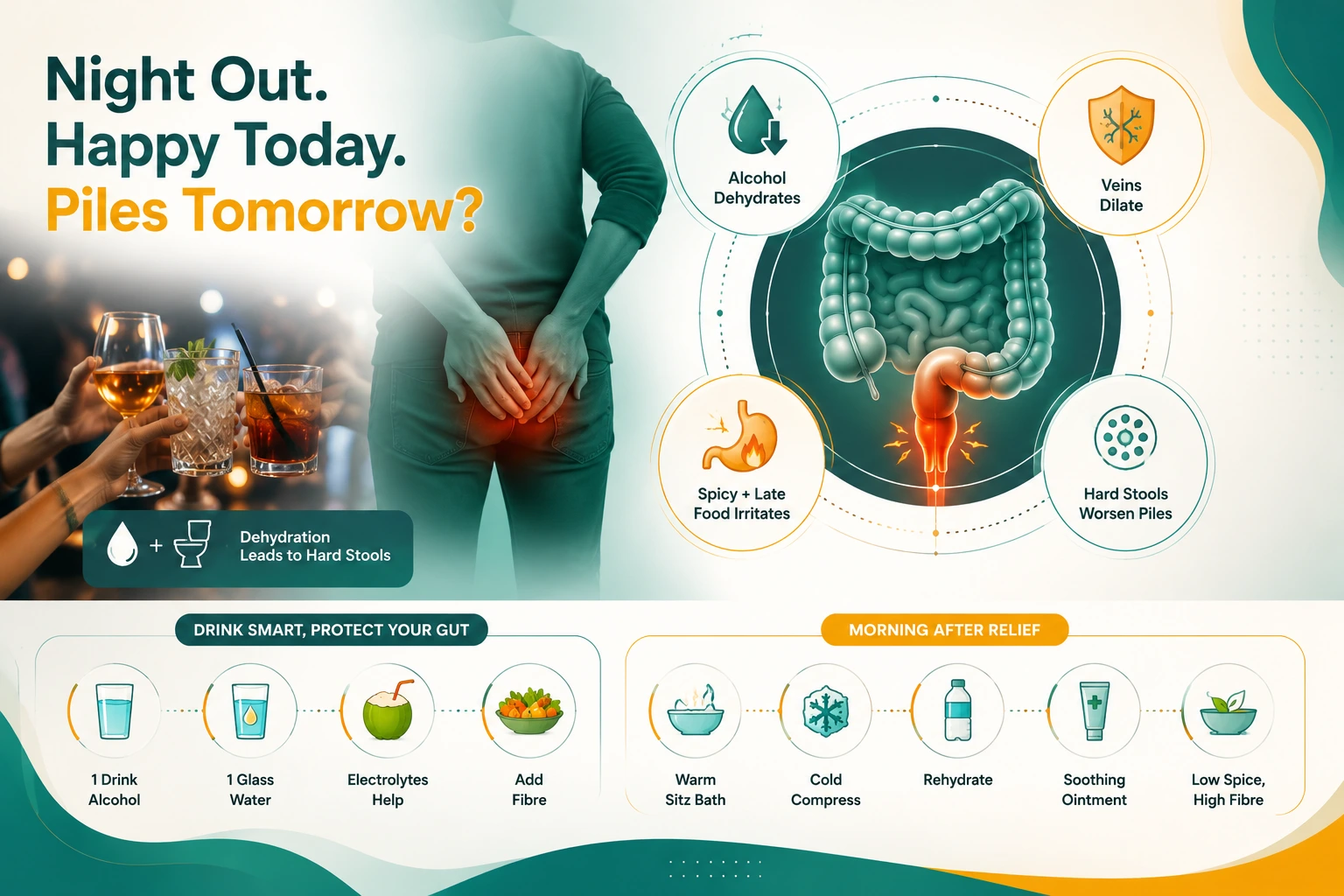
Enjoying the night out with friends often comes with a side of a drink or two. In such situations, this question is thought very commonly—it should not really cause that much damage, right? Well, according to many reputed gastroenterologists like Dr. Parameshwara CM, those “just two glasses of buzz” maybe doing more to your body than you think. The morning after often brings more than just a standard hangover—full body dehydration, and dryness.
Most people associate alcohol with headaches and fatigue. What many don’t realize is that it also directly impacts your lower GI tract, triggering new piles or even causing painful flare-ups of existing ones. Fortunately, there are ways to enjoy your night out and keep the sanity of your next day’s toilet visit.
Read on to understand why this happens in the first place and also get scientifically backed tips to keep your digestive system pain-free.
How does alcohol dehydrate the colon and create dry, hard stools?
- Your body has adapted incredibly at maintaining an optimal hydration level through a process called homeostasis. It does it with the help of hormones, and vasopressin is one of the primary regulators of this process. Vasopressin is released by the pituitary gland in the brain, and works by communicating with your kidneys.
How normal hydration works:
- Under normal conditions, when you drink plenty of fluids, your brain lowers vasopressin levels in the body. This signals the kidneys to make more urine to flush out the excess liquids from the body. Once the excess liquids are flushed out by the kidneys, automatically signals your brain to increase vasopressin in the body. This step is very important, as it stops unregulated removal of liquids from the body, which can result in dehydration.
- This process works the other way round too. When you are dehydrated, your body automatically increases vasopressin levels, which signals the kidneys to stop flushing out more water from the body .
How alcohol disrupts your body’s hydration levels
- Alcohol works by suppressing pituitary gland function, which blocks the vasopressin release in the body. With reduced vasopressin levels, cannot reabsorb fluid properly and continuously flush out water, leading to excessive urination and severe whole body dehydration.

Enjoy your nights out without the next-day discomfort—stay hydrated and care for your gut.
But how does alcohol intake result in hard poop?
Alcohol intake has been shown to work in multiple ways on the gut to result in hard stools.
- Direct impact: When systemic dehydration sets in, your body tries to compensate by pulling water from wherever it can—including your digestive tract. The colon reabsorbs extra fluid from digested waste, leaving stools dry, hard, and difficult to pass.
- Affecting gut movement: Alcohol also slows down peristalsis (the continuous intestinal movement that pushes food through them). As the gut movement slows, stool remains in the colon longer, and also settle down becoming further dehydrated. All these affect the stool consistency to make it hard and difficult to pass out—eventually leading to piles and fissures.
- Inflammation: Alcohol also disrupts the normal balance of the gut microbiome and inflames the intestinal lining, which interferes with normal fluid processing and bowel regularity.
Why does spicy late-night food combined with alcohol irritate the anal lining?
There are multiple aspects of eating and drinking in this scenario which can cause not just irritation, but can also result in intensely painful toilet sessions and piles.
- Late night eating: By default, late night eating is not processed well by the intestines or your body. Your body follows a very evolved and strong natural rhythm—the processes in the body are more active during day, and go silent at night. Hence, when you eat late night, there is reduced digestion (digestive activity of your stomach reduces at night), and the undigested food can stagnate in the intestines as the peristaltic movement also significantly decreases at night. Undigested food in the intestines can damage its delicate lining.
- Capsaicin in the spicy food: The heat in spicy food comes from a chemical compound called capsaicin. Because human digestive enzymes cannot fully break capsaicin down, it travels through the entire gastrointestinal tract intact. When it reaches the sensitive mucosal tissue of the anal canal during excretion, it binds to pain receptors and causes a burning sensation.
- Dehydration from alcohol: Dehydration caused by alcohol makes the body pull water from the intestinal walls to compensate for body-wide fluid loss. This results in thinning of the protective lining of the regions like the rectum too. When you passing capsaicin-rich stool over the dehydrated lining, it leads to sharp irritation, burning, and also potential micro-tears (fissures).
- Alcohol induced vein swelling/expansion: Alcohol is well-reported to expand blood vessels throughout the body—including the veins in the anus and rectum. When these veins become swollen, it stretches the tissues (the rectal and anal lining) around them. This makes the anal lining significantly more fragile and sensitive to friction. And when you pass hard stools through the stretched lining, you can feel it as irritation and pain.
Does alcohol cause blood vessels and hemorrhoidal veins to dilate?
Yes, alcohol intake can cause expansion/dilation in the blood vessels throughout the body. This process is commonly termed by doctors as vasodilation, and can worsen the swelling of veins in the anorectal region—increasing piles pain and pressure.
How does alcohol cause haemorrhoidal veins to dilate?
- Vasodilation: When you drink alcohol, it acts as a vasodilator. This means it expands the smooth muscle walls of the blood vessels (including those in the anorectal region; also called haemorrhoidal veins)
- Swelling: Wider veins means there is more blood flow in the anorectal veins. This stretches the regions because of increased pressure.
- Resulting effects: The enlarged veins push against the surrounding tissue, making them prone to throbbing, and bleeding. When you pass stools the next morning, these veins are easily irritated by friction, triggering uncomfortable haemorrhoid (piles) flare-ups.
What should you drink alongside alcohol to protect your bowel motility?
Remember, alcohol works as a diuretic, meaning it makes your kidneys flush out a lot of liquid from the body. Along with it, large amounts of minerals like sodium and potassium also get flushed out.
The most effective and simple trick to counteract the gut disruptive effect of alcohol:
To counteract this and maintain bowel motility while drinking alcohol, Dr. Parameshwar explains that your best bet is to drink water infused with electrolytes. The most naturally found rehydrating drink—the humble tender coconut tends to work the best in such scenarios, he explains.
Drinking water alongside alcohol keeps your intestinal walls hydrated. It also prevents the colon from pulling water out of your digested food. The electrolytes help maintain proper nerve and muscle function in the intestinal walls, ensuring peristalsis stays active.
A simple way to know how much to drink
Drinking alcohol is disruptive to the body, but if you do choose to drink, use this rule for protecting your gut.
Dr. Parameshwara CM explains how a simple “one-is to-one rule” helps immensely in hydrating the gut. For every glass of alcohol, drink a glass of water. Mix in electrolytes every now for effective hydration.
This easy, and simple hack aids immensely to avoid digestive distress.
Adding fibre to the food you take in with the alcohol is an added bonus he says. Fibre along with the water you drink may reduce some harmful effects of alcohol. Fibre absorbs a lot of water, which keeps the stools smooth and reduces the strain of the toilet visit the morning after.
How can you calm a painful morning-after piles flare-up quickly?
Safe and natural ways to calm piles caused by alcohol intake
- Start with a 15-to-20-minute warm sitz bath to immediately relax the anal sphincter muscles and improve local blood circulation.
- Follow this by applying a cold compress or ice pack wrapped in a clean cloth directly to the area for 10 minutes to reduce the throbbing pain.
- Immediately begin rehydrating with water and electrolyte-rich fluids to reverse alcohol-induced dehydration. This also softens the digested waste.
- Use over-the-counter topical ointments containing hydrocortisone, lidocaine, or witch hazel to reduce swelling and burning.
- Finally, stick to a low-spice diet with soluble fiber for the rest of the day to prevent further irritation and allow the delicate mucosal lining to heal.
- Piles is now understood to be caused majorly by lifestyle factors, increased alcohol intake being one of them. It is common to experience dehydration from alcohol intake. But overtime the dehydration results in anorectal irritation and piles. While there are many tips to help with the irritation and soothe piles, it can turn into a long-term painful condition before you realize it. But modern haemorrhoid solutions are made for such chronic piles. So, do not let lifestyle-triggered flare-ups dictate your comfort—reach out to the care team at Smiles Institute of Gastroenterology to explore modern, lasting solutions for chronic haemorrhoids.
Frequently Asked Questions
Why do my piles hurt after drinking alcohol?
Alcohol acts as a diuretic—it makes your kidneys flush out a lot of water from the body. This causing systemic (whole-body) dehydration that leaves stools dry, hard, and painful to pass. It also dilates blood vessels throughout your body, causing veins in the rectum to swell (swollen veins in rectum is called piles). When you pass the hard stool next day, it causes friction and hurts the piles.
Does combining late-night fast food or spicy food with alcohol make piles pain worse?
Yes, combining spicy or fast food with alcohol worsens hemorrhoid pain. Late-night heavy foods allows undigested spicy compounds (capsaicin) and gastric acids to reach the rectum, directly burning the swollen and dehydrated anal tissues.
Can a single night of heavy drinking cause hemorrhoids to swell and bleed?
Yes, even a single episode of heavy drinking can cause blood vessel dilation and acute dehydration within hours. The wide vessels allow for greater blood flow in them, and this sudden surge of blood flow swells the hemorrhoidal veins. While passing hard, dry stool the next morning, it creates friction that can easily tear the anal lining and cause bleeding.
What is the fastest way to soothe inflamed piles after drinking alcohol?
The fastest relief comes from combining a 15-minute warm sitz bath to relax the anal muscles followed by a cold compress to reduce vein swelling. Simultaneously, rehydrate with water and electrolytes to reverse dehydration, and apply a soothing topical ointment containing lidocaine or witch hazel to numb sharp pain.
