

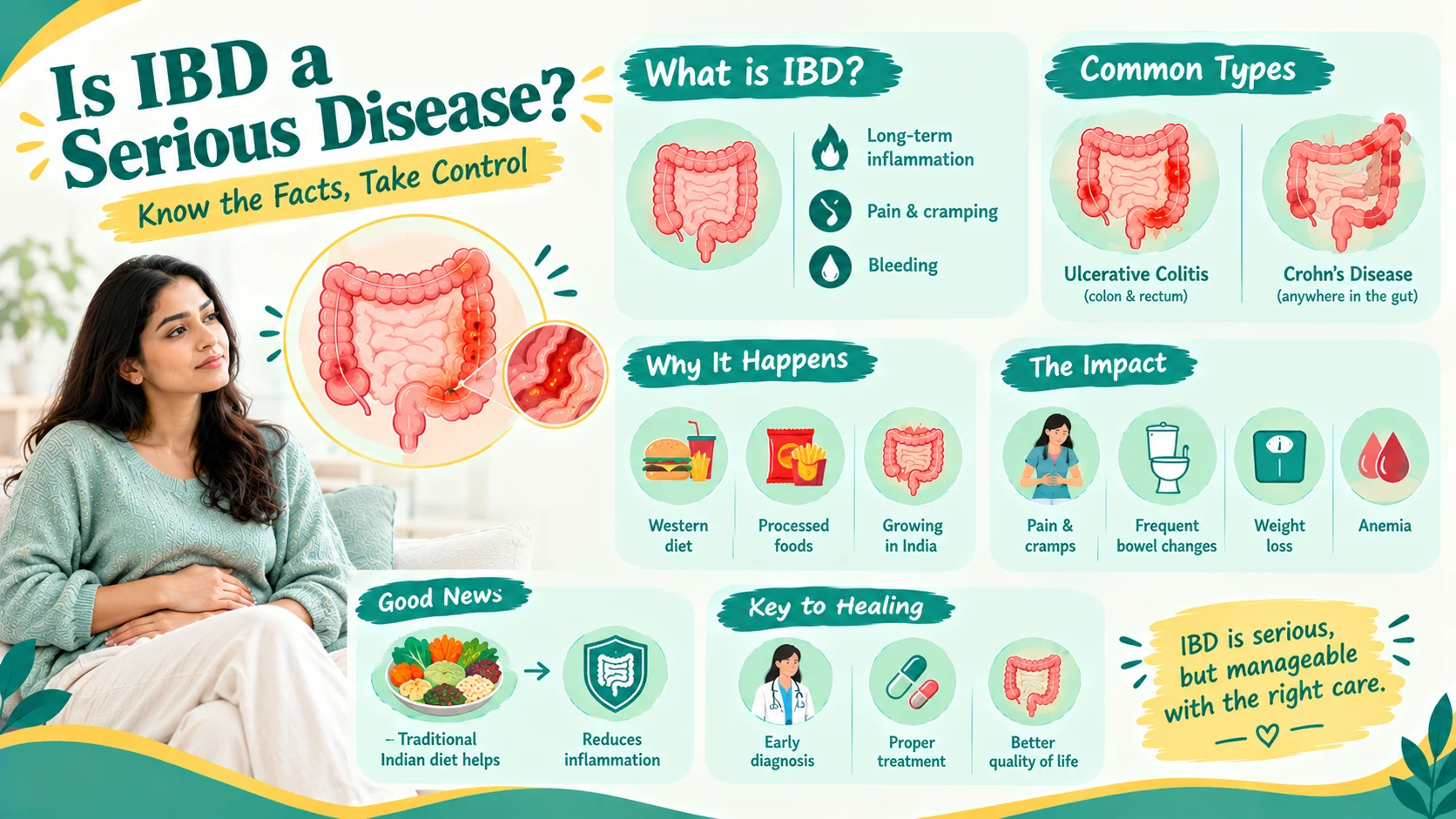
Is IBD a serious disease?
Inflammatory bowel disease or IBD is a condition which affects the bowels—also called the intestines in your body. Classic IBD involves severe and long-term inflammation in the gut region along with significant pain, cramping and in worse cases, bleeding. Unlike IBS, IBD does significantly impact everyday life and can get worse if left untreated.
Although IBD was once considered a rare disease in India, case numbers have surged significantly over the last 15–20 years. Medical studies show that India is experiencing one of the fastest-growing rates of IBD in the entire Asia. Research places the nation’s IBD count at over 2.7 million active cases, and tens of thousands of new diagnoses being reported every year (Kedia & Ahuja, 2017; Global Burden of Disease Study).
Noted gastroenterologists like Dr. Parameshwara CM explain it to be tied heavily to Indians increasingly adopting the Western diet and an unregulated abundance of ultra processed foods. Large-scale studies highlight the same trend—that high consumption of ultra-processed foods significantly increases the risk of developing IBD (Narula et al., 2021).
The silver lining for Indian IBD cases: if the rise in Indian IBD numbers is heavily because of a shift towards a processed Western diet, the solution to this is already right in front of us.
Traditional Indian meals rich in whole grains, lentils, fresh vegetables, fermented foods like curd, and spices like turmeric—are naturally anti-inflammatory. By simply turning back to our traditional food and stepping away from ultra-processed snacks, you hold the key to protecting your intestinal health!
Is IBD serious?
Yes, IBD can have a significant impact on your daily life and prove debilitating—if left untreated. To understand how it can do this, here is an extremely brief introduction to what IBD is and why it can affect quality of life.
- Inflammatory Bowel Disease (IBD) is a term for conditions that cause long-term inflammation in the digestive tract.
- It has two components based on where this inflammation occurs: Ulcerative Colitis (UC)—which affects the inner lining of the large intestine (also called colon) and rectum, and Crohn’s Disease (CD), which can cause deep inflammation anywhere from the mouth to the anus.
- Over time, the constant inflammation makes the intestinal tissue fragile and easily prone to forming ulcers, tears and eventually leading to intestinal bleeding.
- As the gut lining breaks, it becomes harder to digest food, resulting in loss of appetite, weight loss, and chronically low hemoglobin levels (anemia) due to the bleeding.
Untreated IBD is a serious problem.
- Because IBD involves persistent inflammation, leaving it untreated only worsens the damage over time.
- There are many times you can face flare-ups, causing severe abdominal pain, chronic diarrhea.
- Overtime, fragile gut walls can cause ulcers leading to internal bleeding, malnutrition, and permanent scarring of the intestinal tissue. Unlike skin scars, intestinal scarring hardens the organ’s structure—resulting in physical blocks, and loss of normal function that cannot be easily fixed.
- Furthermore, untreated inflammation isn’t always confined to the gut. Molecules causing the inflammation spread throughout the body making painful joints, and skin rashes.
This constant discomfort of flare-ups, pain, bleeding and diarrhea can disrupt work, travel, and severely affect daily quality of life—which is why early medical care and consistently following treatment steps become very important.
How Long Do IBD Patients Live?
- Gastroenterologists believe that although IBD does have adverse symptoms, IBD in general is not considered a fatal illness, and life expectancy for most patients is comparable to the general population.
- Many population-based studies show that having Ulcerative Colitis or Crohn’s Disease does not shorten overall lifespan just by itself.
However, if the IBD remains untreated over decades, it can increase risk of other conditions which can affect lifespan like colorectal cancer, bowel perforation, and risky blood clot formations.
How early recognition of symptoms and treatment can change the picture:
- Early medical treatments put the disease into remission—the gut lining heals, active inflammation stops, and the long-term structural damage that leads to cancer or complications is prevented.
- Consistency matters: With consistent care, and regular endoscopic monitoring, people with IBD can have active and normal lifespans.
Can Mild IBD Be Cured?
- Unlike an infection which can be cured easily, IBD is a chronic condition—with no magic tablet that can cure it.
- Why no magic tablet exists? IBD is complex, it has many genetic or immune factors which can also predispose someone to developing it easily.
- The good news: Mild IBD can achieve full remission, where symptoms completely disappear, tissue heals fully, and patients live symptom-free for years without needing aggressive, heavy medications.
- Mild IBD: Has lesser than 4 bowel movements a day, occasional cramping, minimal blood in stool, normal hemoglobin/CRP levels, and no impact on your ability to work or eat normally. Endoscopy shows mild surface redness.
- Moderate to Severe IBD: Characterized by 6 or more painful bowel movements per day, frequent rectal bleeding, fever, weight loss, low hemoglobin (anemia). Endoscopy shows deep ulcers and narrowing (strictures).
The Indian scenario: The significant surge of mild IBD cases in India is heavily linked to the rapid shift toward ultra-processed foods, and refined Western diets.
Thus, finding a solution for mild IBD is often much more straightforward.
Removing these triggers and restoring gut health through a wholesome Indian food diet can reduce initial inflammation early and significantly. This allows the mucosal lining to heal effectively for long-term gut health.
What Foods Should to Avoid with IBD?
As can be understood from the surge in Indian population with IBD, diet plays a massive role in managing intestinal inflammation. Certain foods can disrupt the intestinal barrier and exacerbate symptoms.
Foods to Avoid:
- Ultra-Processed Foods: Packaged snacks, commercial bakery items, and foods containing artificial emulsifiers are all abundant and easy to fill the hunger cravings. However, they weaken the protective gut mucus layer.
- Deep-Fried & High-Fat Foods: Food rich in saturated fats like palm oil & vanaspati and deep-fried items directly promote pro-inflammatory pathways in the gut.
- Refined Sugars & Artificial Sweeteners: High-sugar drinks—be it soda or packed fruit juices, and artificial sweeteners increase bad gut bacteria which cause inflammation.
Foods to include— using the Indian advantage: Avoiding processed foods and replacing them with traditional Indian anti-inflammatory foods helps stop inflammation effectively. Use more of ingredients like:
- Turmeric or haldi: A proven anti-inflammatory ingredient that heals intestinal mucosal lining.
- Fermented Probiotics: Fresh homemade curd and buttermilk (chaas) help add beneficial gut bacteria.
- Soluble Fiber & Whole Grains: Cooked lentils and cooked vegetables, jowar kanji, ragi kanji, and soft-cooked red or brown rice are excellent options for calming an IBD gut. Some gut-soothing vegetable dishes are cooked bottle gourd curry, steamed pumpkin sabzi, cooked ridge gourd and carrots, and roasted sweet potatoes.
While Inflammatory Bowel Disease is a serious, chronic condition, understanding its triggers helps you gain control of your gut. If you or anyone whom you know is facing any IBD symptoms, contact empathetic and experienced specialists at Smiles Institute of Gastroenterology, Bengaluru. The earlier the treatment begins, the easier it becomes to reclaim gut health.
Frequently Asked Questions (FAQ)
1. What is the difference between IBS and IBD?
IBS (Irritable Bowel Syndrome) causes cramping, bloating, and changes in bowel habits without causing physical damage or inflammation to the gut. IBD (Inflammatory Bowel Disease), on the other hand, is a long-term autoimmune condition that causes severe inflammation, ulcers, and long-term physical damage to the intestinal walls.
2. Are there things in an Indian diet which can cause IBD flare-ups?
Yes. Heavily spiced oils, raw green chillies, and excessive red chilli powder can irritate an already inflamed gut lining. During active flare-ups, it is best to stick to mild, soft-cooked foods like khichdi, curd rice, and steamed vegetables.
3. Will having IBD increase my risk of developing bowel cancer?
Long-term, unmanaged inflammation in the colon can increase the risk of colorectal cancer. This happens usually after 8–10 years of active gut inflammation. However, this risk drops significantly if IBD is well-controlled.
4. How do I know if I am having a flare-up or just normal indigestion?
Normal indigestion resolves within a day or two and involves mild bloating or an upset stomach. An IBD flare-up has persistent symptoms lasting several days or weeks, like frequent bloody stools, abdominal pain, unexplained weight loss, ongoing fever, or extreme fatigue. If you notice blood in your stool or continuous diarrhea, you should contact your doctor immediately.
