

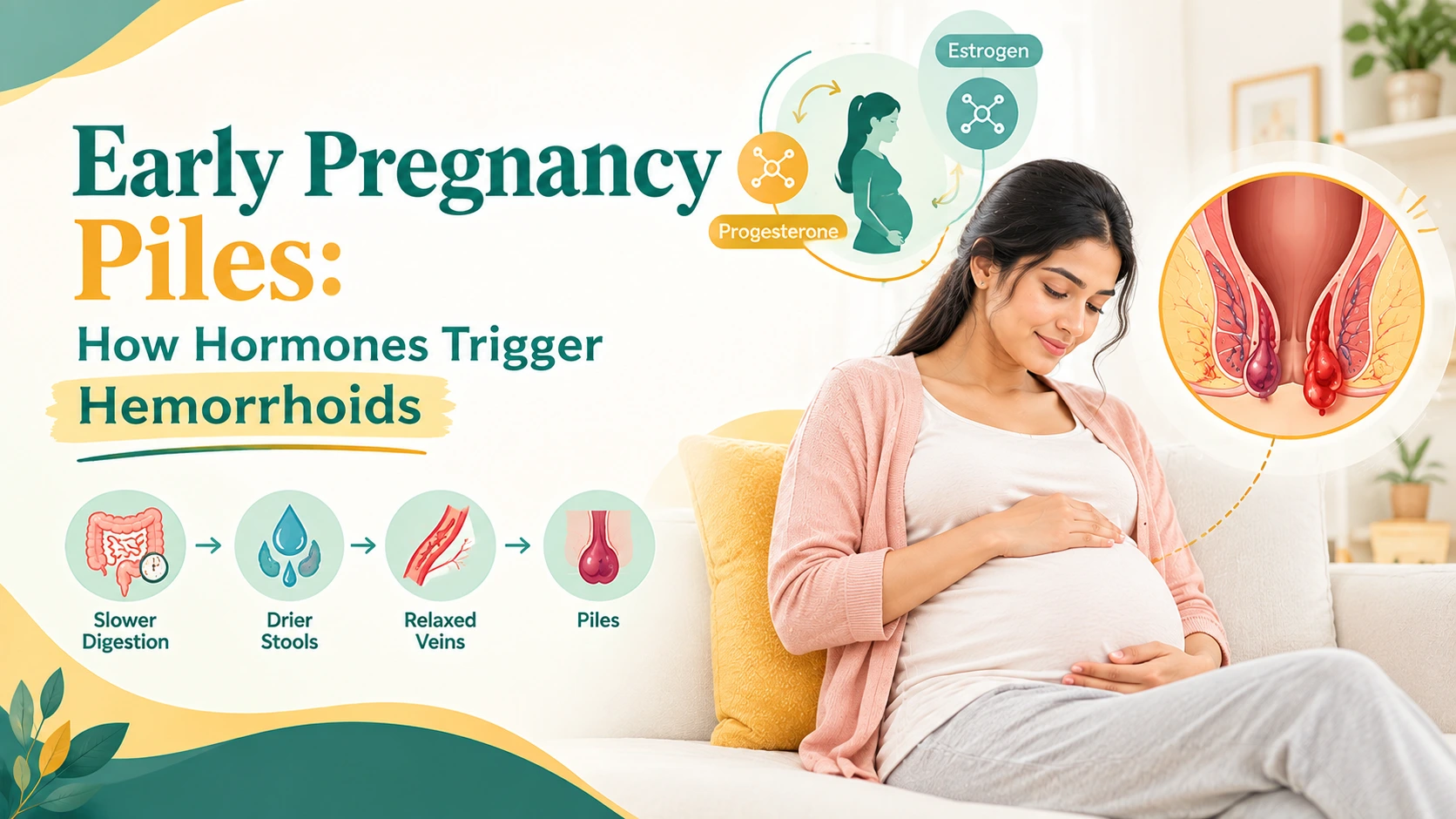
Early Pregnancy Piles: How Hormones Trigger Hemorrhoids
Pregnancy is well-understood to be a period of major changes in the mother’s body—many of which reverse after giving birth, while others leave lasting structural changes. Most of these changes are hormonally driven, and work to support the growing baby.
Pregnancy is divided into three trimesters, based on an average timeline of foetal growth. While many parameters are observed to change across the trimesters, two hormones—oestrogen and progesterone are found to rise abruptly from the beginning and be significantly high till the end of pregnancy. The focus of this article is progesterone, how it effects organs beyond the uterus—like the digestive system.
Piles is a very common side effect during pregnancy. Almost 30—40% of women develop piles during pregnancy. Most women attribute piles during pregnancy to the growing foetus, however, this is true only during the third trimester. What about piles during the first trimester when the growing foetus does not weigh much? These are shown to be almost entirely hormonally driven—with progesterone playing the major role. Read on to understand how early pregnancy haemorrhoids/piles are formed and gentle solutions which you can use to easily avoid them.
Why do haemorrhoids often develop months before the baby adds physical weight?
It is a common misconception that haemorrhoids or piles develop only during the third trimester. Doctors report piles cases as early as the first trimester itself. Only some of the cases are flare ups of previous piles cases, and unhealthy lifestyle practices.
What about remaining first trimester piles cases?
Doctors blame it on the intense hormonal shifts occurring to prep the uterus for housing and growing a healthy foetus.
The primary culprit responsible for early pregnancy piles is progesterone, a key hormone essential for supporting pregnancy till the end. Progesterone does this by relaxing the smooth muscle walls of the uterus to prevent premature contractions.
However, its effects are not confined just to the reproductive system. Progesterone can also act on smooth muscle tissue of the digestive system and the blood vessels (the arteries and veins). This triggers two cascading effects that result directly in piles:
- Sluggish digestion and constipation: Progesterone relaxes the smooth muscle walls of the intestines, slowing down their natural wave-like contractions that move food through the gut. When food stays for longer in the intestines, it allows the colon to re-absorb water from it, resulting in drier stools. Hard and dry stools need increased straining during daily bathroom visits. Intense straining puts significant pressure on the veins in the anal canal, causing them to swell and bulge. Swollen veins in the anal region are also called as piles or haemorrhoids.
- Venous relaxation: Rising progesterone also softens and relaxes the walls of blood vessels, including the cluster of veins in lower rectum and anus. As these vein walls relax, they become more prone to swelling even under slight pressure.
These two changes—harder stools paired with relaxed veins, means that straining from constipation can easily inflame and bulge rectal and anal veins, creating early pregnancy haemorrhoids well before the physical weight of the growing baby enters the picture.
Safe, natural and non-medicinal remedies relieve early pregnancy constipation
The key to focusing on avoiding and eliminating early pregnancy constipation is to understand that your intestinal movements are slower due to rising progesterone levels. While the cause here—hormonal shifts cannot be altered, all of the remedies must be focused on altering dietary habits and movements to keep digested waste soft and easy to push during bathroom visits.
- Load up on bulk-forming fiber: Also called as soluble fiber, this draws water into the stool, making it softer and easier to pass without straining. Another fiber type known as insoluble fiber adds structural bulk to stools. By doing so, it stimulates the natural wave-like motion of the gut. Include the following in your diet as pregnancy safe options:
- Isabgol (Psyllium Husk): Soak 1–2 teaspoons in a glass of warm water or lukewarm milk, and drink it before bedtime to soften dry and hard stools. The husk has plenty of insoluble fibre which can bulk stools by binding to water in the gut.
- Whole grains & pulses: Swap Maida for whole wheat flour. Instead of white rice, include more brown rice, or millet staples like Ragi and Jowar. Unpeeled legumes like whole Moong or Chana or Rajma also are excellent to add bulk to stools.
- Soaked Seeds: Sabja seeds or Flaxseeds, act as natural gel-like lubricators that lubricate the digestive tract. However, remember to soak them in water thoroughly till they for a nice gelatinous mass before consuming them.
- Do not skip hydration: Without adequate fluids, high-fiber foods can actually worsen constipation. Drinking plenty of fluids also counter the effect of progesterone to draw water out of the colon.
Sometimes it can get boring and overwhelming to drink just plain water, especially when you are already battling morning sickness and appetite loss. There are plenty of other natural and safe options for keeping the hydration levels.
- Soaked Prunes or Black Raisins (Kishmish): Soaking 6–8 black raisins or 2–3 prunes overnight in water and consuming both the fruit and the liquid first thing in the morning adds natural sorbitol and magnesium in the gut, which gently pulls water into the intestines.
- Warm Water Infusions: Drinking warm water throughout the day stimulates the gastrocolic reflex—the physiological signal that prompts the bowel to contract after fluid enters the stomach. You can infuse the water with ginger, and jeera to help with the taste and support the stomach functioning.
- Electrolyte-Rich Fluids: Fresh Tender Coconut water or homemade buttermilk (seasoned with roasted cumin and ginger) also provide hydration alongside natural minerals that support bowel motility.
- Mild dietary gut stimulants: There are quite a few traditional Indian dietary additions that can help increase the movement of food through the gut or even lubricate intestinal walls gently without triggering spasms in the uterus.
- Warm milk with A2 Cow’s ghee: Adding a teaspoon of pure ghee to a warm glass of milk at bedtime provides mild lubrication to the bowel lining and helps soften hard stools.
- Cooked fiber-rich vegetables: The focus point here being cooked vegetable rich in fibre. Naturally fibre rich and hydrating veggies such as Bottle Gourd, Ridge Gourd, Okra, and Pointed Gourd make excellent options for keeping stools soft. Cooking them with mild spices makes them easy to digest.
- Move after every meal: Progesterone slows down gut motility, but physical motion helps physically stimulate the intestinal movement and also improves pelvic blood circulation. Try exercises like:
- Gentle Walking: Even a brisk 20 minute walk every day after meals helps move food through the digestive tract faster.
- Prenatal Yoga Stretches: Simple, safe movements such as Baddhakonasana (Butterfly Pose) or gentle pelvic tilts help release tension in the pelvic floor and stimulate movements in the lower intestines where the digested waste/stools are present.
- Intestine friendly bowel habits: How you sit on the toilet changes the directly affects how much straining is required to pass stool.
- Use an Indian toilet or at least a stool: Even placing a small footstool under your feet while using a Western toilet elevates your knees above your hips. This aligns the rectum with the anal canal thus helping smooth stool passage without straining delicate rectal veins.
- Do not control the urge to pass stools: Delaying a bowel movement allows the colon more time to absorb water from the stool, making it progressively harder and more difficult to pass later.
Which positions during sleep help reduce venous pressure in the pelvis?
Sleeping or resting positions, especially when there are intense hormonal changes resulting in changes and increased weight on the pelvic region, also matter significantly to help relieve pressure from the pelvic veins.
Lesser pressure on the pelvic veins makes them less prone to stretching, swelling and inflammation.
How changing sleeping positions help pelvic veins?
During pregnancy, lying flat on your back allows the weight of the expanding uterus to press directly on the inferior vena cava—the large vein responsible for carrying blood from your lower body back to your heart. This compression causes blood to pool in the lower rectum and pelvic floor, significantly increasing venous pressure and exacerbating swollen piles.
To relieve this blood pooling and reduce vein pressure, try positions such as:
- Left-side sleeping: Lying on your left side is the single most effective position for pressure relief on pelvic veins. It shifts the weight of your internal organs from the inferior vena cava, allowing blood from the lower body and pelvic veins to flow back toward your heart.
- Elevated knees for hip alignment: Placing a firm pillow between your knees and ankles while side-sleeping aligns your hips, pelvis, and spine naturally. This alignment naturally keeps blood vessels open and reduces localized pressure around the anal canal.
- Slight lower body elevation: Keeping a small cushion under your lower legs or feet while resting encourages blood flow to return back to the heart instead of pooling in the lower body. By elevating your lower half slightly above the level of your heart, gravity can naturally act on blood pooled in swollen hemorrhoidal veins, helping them to resolve naturally.
When should pregnant women consult a proctologist for severe bleeding?
Piles in stage 2 and above are common to show bleeding. Most bleeding at stage 2 occurs as spots, which can be observed when you clean yourself after stool movements.
However, it is best to visit a colorectal doctor, even if you are assuming that the bleeding is just simple piles/early pregnancy haemorrhoids. In early pregnancy, unexplained bleeding requires prompt medical evaluation to rule out other gastrointestinal conditions and to protect both maternal and foetal health.
When attended to as soon as noticed, any condition can be managed more effectively and with wider treatment options insists Dr. Parameshwara CM of Smiles Institute of Gastroenterology. With all the advancements in medical treatments, treating piles or any gastrointestinal condition is a matter of a simple consultation with qualified proctologists.
Consult a proctologist immediately if you notice any of the following warning signs:
- Heavy or persistent rectal bleeding: Blood that drips steadily into the toilet bowl, leaving the stool dark red, or leaves large clots need urgent evaluation rather than waiting for the next scheduled check-up.
- Dizziness, fatigue, or paleness: Heavy blood loss can quickly lead to anemia or reduced oxygen delivery. If bleeding is accompanied by feeling faint, and lightheaded, or short of breath, seek immediate emergency care.
- Unbearable pain: Simple internal piles are usually painless unless they become thrombosed (when a blood clot forms inside the swelling) or hang entirely outside the anal opening. Sharp, continuous, or throbbing pain signals a potential medical emergency.
- Black, tarry stools: Dark or black-colored stools usually indicates bleeding higher up in the digestive tract such as the stomach or small intestine—rather than from lower rectal piles. If you do notice this, visit the gastroenterologist right away.
- Prolapsed piles which does not reduce: Notice any hanging tissue outside the anal canal which remains painful, swollen, or unable to be gently pushed back in? Prompt specialist care is needed at such times to prevent further complications.
Most early pregnancy haemorrhoids are attributed to intense hormonal shifts which naturally once the fertilization event happens and the embryo travels to the uterus for further development. These hormonal changes are needed for supporting the foetal growth, and the most prominent hormone—progesterone is the all-shining star in this process. However, progesterone acts on smooth muscles outside the uterus too, and causes other side effects like slower gut mobility and blood pooling in the pelvic regions.
Since hormonal changes are required for pregnancy, countering their side effects must focus on dietary and movement changes which help improve gut movement and reduce pressure on the pelvic veins. By incorporating high-fiber foods, staying thoroughly hydrated with gentle fluids, adjusting your sleep posture, and adopting strain-free toilet habits, you can effectively manage digestive sluggishness before it turns into chronic discomfort.
Remember, experiencing piles in the first trimester is a direct, physiological result of your body working hard to support new life. While home measures offer significant relief, never hesitate to reach out to qualified gastroenterologists at Smiles Institute of Gastroenterology if you experience persistent pain or heavy bleeding. With the timely guidance, you can keep your digestive system moving smoothly and focus on a comfortable, healthy pregnancy journey.
Frequently Asked Questions
Can early pregnancy trigger haemorrhoids?
Yes, early pregnancy is full of significant hormonal changes to prepare your body for accommodating a new life inside of it. Progesterone, Human Chorionic Gonadotropin (hCG), and oestrogen are the major surges your body will experience. Progesterone relaxes smooth muscles (like those in the walls of the uterus, intestines, and blood vessels). While its effect is majorly on the uterus, it also relaxes intestinal walls, slowing down its movements and causing hard stools. When you push the hard stools out, the relaxed walls of the blood vessels in the anal canal get inflamed to result in piles or haemorrhoids.
How early in pregnancy do you get piles?
Piles can develop as early as 4 to 6 weeks into pregnancy, well before there is considerable foetal weight. This early onset majorly results from a surge in progesterone, which slows digestion, leads to constipation, and relaxes vein walls in the pelvic region.
What do pregnancy piles feel like?
Pregnancy piles may feel like swollen bumps or lumps around the anal opening that can throb, itch, or burn, especially during or after a bowel movement. You also may feel a sensation of fullness or pressure in the rectum, along with mild discomfort when sitting or walking.
Which sleeping positions reduce pelvic venous pressure during early pregnancy?
Sleeping on your left side is the most effective posture, as it removes the weight of your abdominal organs from inferior vena cava (vein which returns blood from lower body to your heart). This position promotes unobstructed blood flow from your lower body back to your heart. For extra relief, you can try a pillow between your knees to align your hips.
When is early pregnancy rectal bleeding a sign to consult a proctologist or OB-GYN?
If you notice lots of bleeding during stool movements, observe clots in stools, and feel faint and light-headed, it is necessary to immediately see an experienced proctologist or OB-GYN. However, if you notice dark-red blood/ blackish stools visit a qualified colorectal/gastroenterologist to check for any upper gastrointestinal bleeding.
