

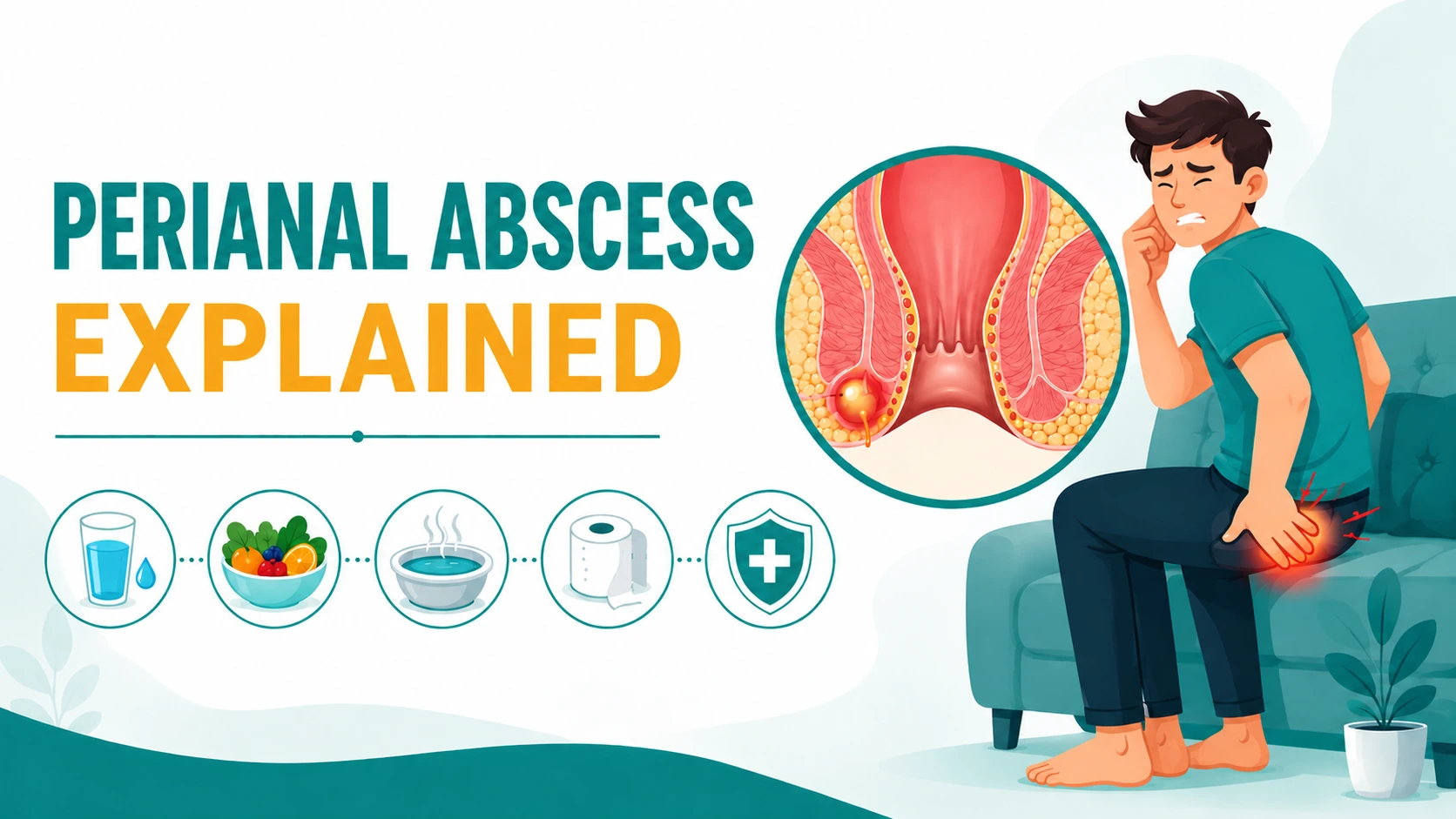
The term abscess is a medical term used for a pus-filled boil. It can develop anywhere in the body, but is more prone to form where there are glands. Perianal abscess, peri meaning around or near, are boils which develop near the anal glands. This condition is very common and shows more predominance in men between 20 to 50 years. Treatments for perianal abscess are also equally straightforward and very effective. Seeing a colorectal specialist early can make all the difference, it can shift you from a state of painful uncertainty to quick and effective healing.
Why do people get perianal abscess?
While perianal abscesses predominantly develop in men (up to 70% of the cases in clinic), the condition is not exclusive to them; women make up to 30% of the cases, and even male children under twelve months can develop it.
Many medical reports have confirmed that up to 90% of all the reported perianal abscess cases are caused by one specific reason—blocked anal glands, also known in the medical field as cryptoglandular origin.
The remaining 10% of the perianal abscess cases are of non-cryptoglandular origin, also medically termed as non-specific causes like Crohn’s disease, trauma to the anal region from previous surgery, or specific infections like some Sexually transmitted Infections (STIs).
Given the above information, let us take a look at how the 90% of the cases develop perianal abscess.
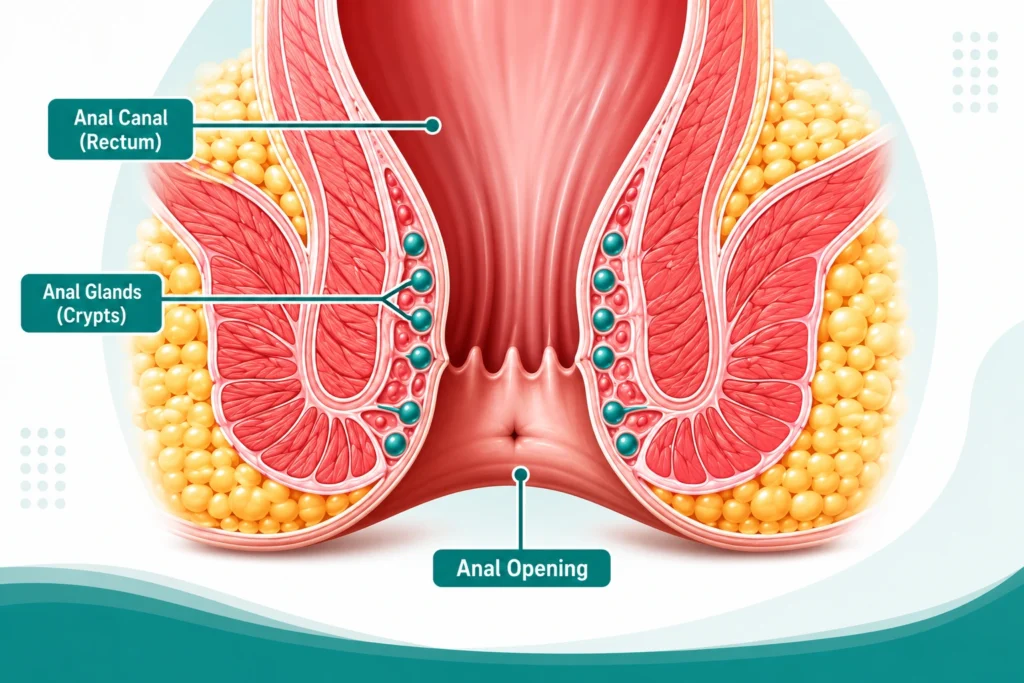
As can be seen above, the anal opening is surrounded by at least 10–12 mucus glands which help in lubricating the passage of bowels.
When bacteria get trapped in these crypt glands, either due to trapped small particles of feces or other debris, the bacteria can overgrow and cause an infection.
Infection generally results in fluid (pus) build up and becomes a lump that is red and painful. This painful lump or boil is called the perianal abscess.
What does the start of a perianal abscess feel like?
Even before you notice that you may have a boil near the anal opening, there are some tell-tale signs which can warn you of what is happening underneath the anal skin. Noticing these symptoms can work greatly to your advantage, as you can take action with conservative remedies which work quite well when a perianal abscess has just begun to form.
Keep a look out for symptoms like:
- At the beginning, a developing perianal abscess will start as a vague feel of pain
- You may also have a sensation of fullness near the rectum
- These two symptoms overlap with that of a mild hemorrhoid, which can naturally be quite confusing to anyone initially.
- However, this discomfort evolves into a sharp, throbbing pain because the anal gland infection begins from within the gland and can spread outward into the nearby tissues.
- This pain also feels aggravated by normal daily movements like walking, sitting down, or having a bowel movement.
Once the infection sets in, you will soon notice some other early signs of a perianal abscess developing, like:
- A Hard, Painful Lump: A noticeable, localized swelling near the anal opening that is very tender to touch.
- Skin Warmth & Redness: The skin over the forming abscess becomes tight, and hot to touch.
- Other symptoms: You may also feel other early signs of infection, such as low-grade fevers, sudden chills, or a general feeling of fatigue.
How to make an abscess go away naturally?
There are multiple conservative approaches which can help ease the symptoms of the abscess. However, these steps will not cure the underlying infection, but only help to reduce the throbbing pain:
- Warm Sitz Baths: Sit in a tub filled with a few inches of plain, warm water for 15–20 minutes, thrice a day. This improves blood circulation which eases the sharp, throbbing ache.
- Gentle Local Hygiene: Avoid using anything which can cause a lot of friction, cuts and thus, new bacteria. Instead of a toilet paper, cleanse the area gently using water or wet wipes, and then gently pat the skin dry with a clean towel.
- Loose, Breathable Clothing: Wear loose-fitting cotton underwear and pants. This prevents sweat accumulation and reduces constant friction against the painful lump.
- A Warm Compress: Apply a clean, warm, damp washcloth to the area to give soothing relief and help inflammation down.
- Increase Dietary Fiber: Eat plenty of fiber-rich foods like whole grains, oats, beans, fruits, and vegetables to keep stools soft. When stools are soft and gel-like, they pass easily avoid any damage to the anal canal.
- Stay Hydrated: Drink plenty of water throughout the day (aim for continuous hydration rather than bouts) to prevent hard stools and constipation.
- Avoid Irritating Foods: Cut out heavily spiced dishes, caffeine, and processed junk foods, which can irritate the digestive tract and trigger painful bowel movements.
How to stop a perianal abscess from forming?
It sure is good to know that there are multiple and easy conservative options for helping with a perianal abscess. However, the best treatment of all is prevention. Below are some points which you would have already heard of, but can never be stressed upon enough.
- Eat high-fiber foods: Eating fruits, vegetables, and whole grains keeps your bowel movements regular and prevents hard stools.
- Drink plenty of water: Staying hydrated keeps your stool soft so you do not have to strain on the toilet.
- Treat diarrhoea quickly: Frequent watery stools can irritate the anal area and force bacteria into the internal glands.
- Manage digestive conditions: Getting medical help for underlying conditions like Crohn’s disease helps lower your risk of infections.
- Clean the area gently: Use a water after bowel movements instead of rough toilet paper to avoid skin scratches.
- Keep the skin dry: Pat the area dry after washing to prevent moisture. Remember, the anal area often does not get exposed to air, which means the moisture remains trapped in a closed area. This may times creates the perfect conditions for bacterial growth.
- Avoid sitting on the toilet too long: Sitting and straining for long periods increases pressure on the rectal veins and tissues. This pressure can create small nicks or cuts which can expose the internal glands to faecal material and other debris.
- Treat anal tears early: Superficial tears in the anal skin are called fissures. Tears and cuts must be treated immediately so it does not get infected.
- Change diapers frequently: For infants, changing wet or dirty diapers right away keeps stool bacteria from entering their glands.
Managing a perianal abscess requires prompt medical attention than self-treatment at home. While maintaining good hygiene and a high-fiber diet can support overall digestive health and lower the risk of future blockages, these natural methods cannot cure an active infection. If you notice signs of swelling, redness, or worsening pain near the rectum, it is important to contact a good colorectal doctor for a proper evaluation. Early diagnosis and professional drainage are the safest ways to resolve the abscess, and prevent further complications.
