

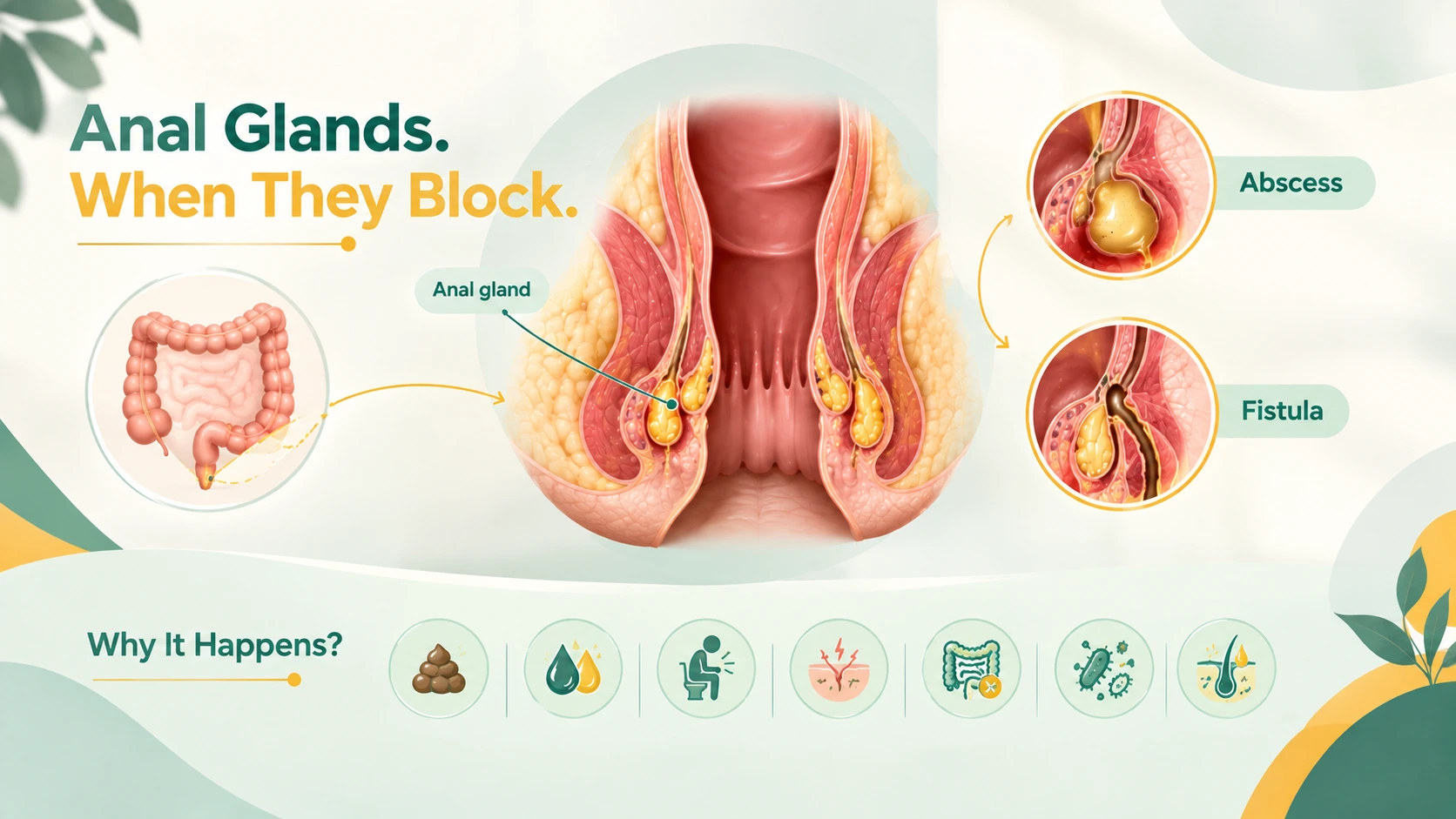
The human body is a remarkably complex network, made up of specialized systems with equally specialized functions. The well-known and remembered ones are structures like muscles, bones, blood, skin etc. However, there are smaller structures like glands that play an equally vital role in keeping us healthy but may not make that list. Case in point: salivary glands. By constantly producing saliva through the day and night, they protect against severe dry mouth, painful ulcers resulting from friction of cheeks and teeth, and poor digestion.
Similarly, mucus-secreting glands line various parts of the body to provide crucial lubrication. In the anal canal, these glands ensure the smooth passage of daily bowel movements. Like any other part of the body, these glands are also susceptible to infection. When anal mucus glands become blocked or infected, they can lead to painful conditions ranging from simple abscesses to complex fistulas.
Below is a complete guide to understanding these common anal conditions, and some common questions related to them.
Why do anal glands get blocked and infected in the first place?
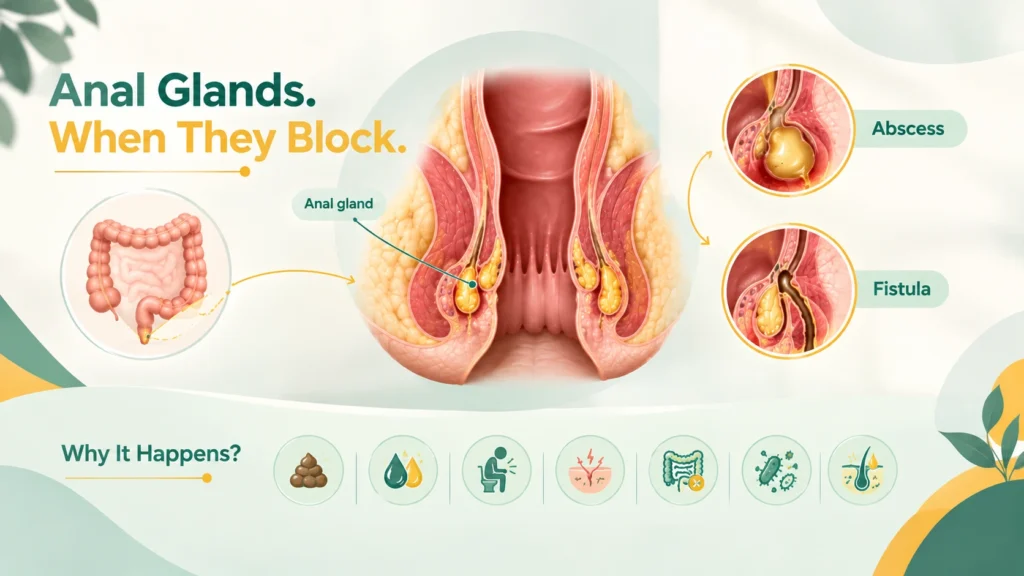
There are about 10–12 mucus glands which line the anal canal. They function to make the daily passage of bowels smooth and frictionless against the skin of the anal canal. However, when they get blocked, it leads to a painful condition called perianal abscess. When the abscess is left untreated for long, it accumulates liquid, and the body forms long tube-like tunnels called fistula to contain the liquids.
Reasons for blocked anal glands:
- Faecal contamination: This is one of the most common direct causes; when small stool particles or foreign bacteria become physically trapped in the opening of the glands, it gets effectively blocked.
- Long-term constipation or diarrhoea: Either constipation or diarrhoea occurring frequently causes significant trauma to the anal lining, which can lead to persistent inflammation. This makes it easy for faecal matter to enter and block the glands.
- Thickening of mucus: Inadequate dietary fiber, insufficient water intake, and even prolonged sitting can sometimes cause the lubricating fluid to thicken, blocking the natural drainage of the glands.
- Tears: Trauma from inserting foreign objects, or from a pervious surgical procedure, or tears in the skin from anal fissures can make the entry of stool particles into the glands easy.
- Underlying medical conditions: Conditions such as Crohn’s disease or ulcerative colitis heavily increase the risk of anal gland blockages and subsequent fistulas. Sexually transmitted Infections (STIs) like chlamydia, syphilis, or herpes in the rectal area can also cause severe tissue inflammation that blocks the glands.
- Hidradenitis Suppurativa: This is a chronic skin condition that affects specialized sweat glands in areas like the groin and perianal region, often leading to recurring blocked glands and deep abscesses
What is the difference between a simple abscess and a complex fistula?
A simple abscess is an acute (short-term), localized collection of pus caused by an infected gland in the anal canal whereas, a complex fistula is a long-term condition that develops after an abscess fails to heal properly.
Here is a table for a quicker and simpler understanding of the two conditions
| Feature | Simple Abscess | Complex Fistula |
| What it is | A sudden pocket of pus caused by an infected gland near the anus. | An abnormal tunnel that forms between the inside of the anus and the outer skin. It develops over a longer time. |
| How it develops | It forms quickly when an anal gland gets blocked and infected. | It usually develops when the abscess fails to heal completely. |
| Depth of infection | It remains shallow and localized near the skin surface. | It extends deep into the tissue and can also go through the anal sphincter muscles. |
| Main symptoms | It causes sharp, throbbing pain along with localized swelling and fever. | It leads to constant fluid drainage, bad odor, leading to recurring skin irritation. |
| Treatment approach | It usually requires a straightforward minor procedure to drain the trapped pus. | It requires surgery to permanently close the tunnel while protecting bowel control. |
Can an anal abscess heal completely without forming a fistula?
- Yes, an anal abscess can heal completely without ever forming a fistula.
- However, it comes with a significant number—only about half of all patients with anal abscess heal fully within 4—6 weeks after a proper surgical drainage.
How to help complete anal abscess recovery without fistula formation:
The likelihood of recovering from an anal abscess can increase significantly by the following steps:
- When the abscess is diagnosed early and promptly drained by a qualified colorectal specialist.
- Complete healing also depends on how well you follow post-procedure care.
- These easy steps include warm sitz baths, hygiene, and ensuring the surgical wound heals from the inside to prevent trapped infection.
Thus, it becomes critical to remember that only when the drainage is incomplete, a tunnel called fistula develops during the healing process. To prevent complex fistulas from forming, this step is important and strictly practiced by the colorectal specialists at Smiles institute of Gastroenterology.
How soon after draining an abscess should you monitor for fistula formation?
- An abscess treatment in most cases needs the attention of a colorectal specialist who will perform an incision and drainage procedure to release trapped infected fluid.
- During recovery, it is normal to notice mild fluid drainage on and off for up to 4–6 weeks as the wound heals from the deep tissues outward.
- Approximate timeline for abscess recovery—6 weeks.
Fistula signs after anal abscess treatment and recovery of 6-weeks:
- After a 6-week period, if there is still persistent fluid drainage, it is one of the most tell-tale signs of a fistula tunnel which has been lying undetected during the check-ups.
- You may also notice other symptoms which are felt like a cycle of localized swelling, pain, and sudden fluid release.
- There is generally a period of relief after the release, which is natural to be felt like the infection has died down, but is not the case.
Why a fistula goes undetected at times during anal abscess recovery:
- During initial post-abscess drainage check-ups, an underlying fistula can easily go undetected because of the surrounding tissue swelling, raw wounds, and normal post-surgical inflammation.
- These naturally mask the tiny internal opening of the fistula tunnel and make them hard to locate.
- Additionally, as long as the external abscess drainage incision remains open, fluid drains freely. This hides the localized pressure that typically is used by doctors to feel and establish the fistula tract.
What are the early red-flag signs that an infection is spreading internally?
Mild discomfort and drainage are normal after an abscess procedure. However, there are certain symptoms to indicate that an infection is actively spreading into deeper tissue spaces surrounding the anal region.
Early red-flag signs of an internal infection that needs immediate medical attention
- Severe, and rapidly worsening pain that doesn’t respond any prescribed medication.
- A feeling of redness or warmth that feels like it is radiating around the surgical site.
- A sudden firm swelling in the surrounding buttocks or perineum.
- Additionally, if you notice a sudden foul-smelling discharge, red streaks spreading across the skin, or an inability to pass urine, these are clear signs of deep tissue involvement.
- Other systemic (whole-body) warning signs include high fever, chills, an unexplained rapid heart rate, nausea, or feeling lightheaded.
- Experiencing any of these symptoms requires immediate emergency medical evaluation rather than waiting for a routine post-op checkup.
Anal abscess and fistula are very common anal condition which can naturally feel very isolating. However, with the lates medical innovations, these have become highly treatable. The key is—early detection and treatment, these two can make all the difference in the recovery journey and in preventing complications like deep tissue infections or complex fistula tracks. Pay close attention to your body’s healing signals and never ignore red-flag symptoms like persistent drainage or worsening pain. You do not have to navigate this recovery journey alone or suffer in silence. If you are experiencing ongoing discomfort or suspect a fistula, schedule a consultation with the expert colorectal team at Smiles Institute of Gastroenterology for a quick, complete, and effective evaluation and a personalized treatment plan designed to restore your comfort and smile.
Frequently Asked Questions
Can a boil turn into a fistula?
A common skin boil caused by an infected hair follicle or sweat gland on the outer skin will not turn into an anal fistula. However, this is not the case for a simple skin boil near the buttocks; this boil is actually a deep anal abscess because of an infected internal anal gland. If this boil fails to heal properly or is left untreated, it eventually forms an abnormal fistula tunnel.
How to avoid fistula after perianal abscess?
While not all fistulas are preventable, getting prompt surgical drainage from a colorectal specialist as soon as an abscess forms, is the most critical step to reduce the risk of fistula formation. After abscess drainage, following the doctor’s wound care instructions like including daily sitz baths and allowing the incision to heal from the inside out will ensure that the wound is healed from the inside. Finally, avoid squeezing the area, finish prescribed antibiotic course, and maintain soft bowel movements to keep the healing tissue clean and free from excess pressure.
What happens if an untreated perianal abscess pops on its own?
When an untreated perianal abscess bursts by itself, it will provide sudden pain relief as trapped pressure is released. However, it is important to understand that the underlying infection still is active. An abscess bursting by itself also leaves a small or irregular opening on the skin. Some pus and bacteria continue to get trapped inside due to incomplete drainage, increasing the risk of a deep-tissue infection. Furthermore, the small amounts of infection left inside eventually make the development of an anal fistula almost inevitable.
How long does it take for a drained perianal abscess to fully heal?
With proper care of the post-drainage wound, it takes about 4—6 weeks of complete care for the perianal abscess to full heal from the inside out. If you notice persistent discharge along with pain, sensitive anal area, and redness, it almost always indicates a fistula which needs prompt medical attention.
Is surgery always required to fix an anal fistula caused by an infected gland?
Yes, surgery is almost always required because an anal fistula is a permanent tunnel that cannot heal on its own. While antibiotics can treat active infection, they cannot close the tunnel connecting the abscess to the outer skin. However, modern treatments range from minimally invasive options like laser therapy or LIFT ensuring the tunnel is effectively sealed while there are minimal cuts to the surrounding anal tissues.
