
Piles is one of the most common complaints amongst other colorectal conditions. Lifestyle habits such as poor hydration, reduced fibre intake, and sedentary activities are linked to almost 70% of the piles cases.
Almost 5 in 10 adults face piles symptoms at some point in their lives, with numbers increasing in urban areas. Despitebeing so prevalent, it is natural to feel significant hesitation or uncomfortable to speak about it, even with close family or friends. But worry not, you are not alone. Here is a doctor approved, and concise article so you can take the first step to regain your confidence from the privacy of your home.
If you notice mild discomfort, itching, or occasional bright red spotting during bowel movements, it is essential to consult a specialist early on to evaluate the starting stage of piles, as timely medical intervention can prevent the condition from progressing and ensure a much smoother recovery through non-surgical or minimally invasive options.
While identifying symptoms like rectal bleeding, itching, or visible lumps is the first step in diagnosing hemorrhoids, understanding the available medical interventions is crucial for long-term recovery. For those in advanced stages where lifestyle changes are no longer effective, modern medical technology offers minimally invasive solutions that prioritize patient comfort and fast healing. Choosing a specialized procedure like pile removal through advanced laser surgery ensures a precise, bloodless treatment that targets the root of the problem with minimal downtime. By addressing the condition early with professional care, patients can transition from painful symptoms to permanent relief and a quicker return to their daily routines.
How do you check for piles?
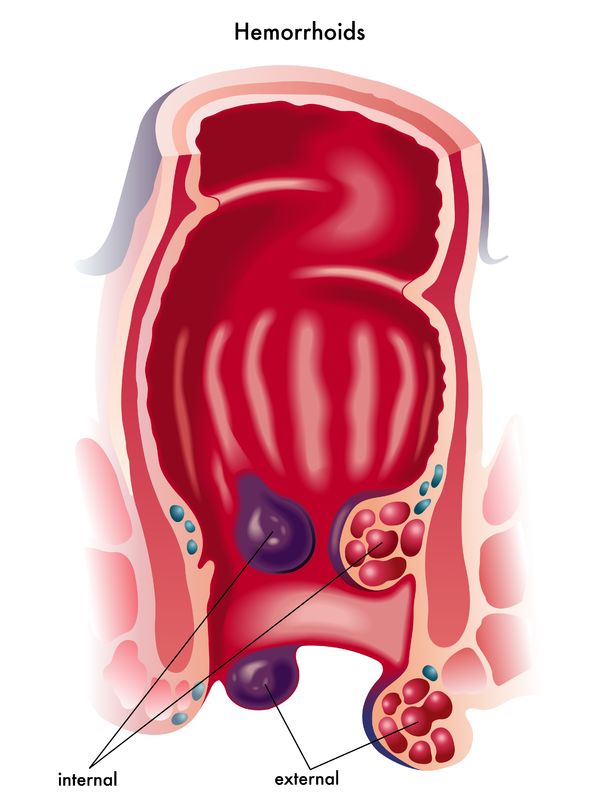
Piles are swollen vein in the rectal or anal areas. Here are some clear pointers to understand how to check if the pain and discomfort you are feeling is because you have piles.
1. Itching or irritation around the anus.
2. Feeling of fullness in the rectal area.
3. Pain while sitting or passing bowels.
- When you try to see the bulge with the help of a mirror, you would see it as a bluish-purple or dark-coloured swelling, mainly caused because of the blood clot.
- If you notice sudden, and severe pain around the anus—even while sitting or walking.
- Tenderness of the swollen lump while you touch it, which may make your daily activities also uncomfortable.
It is also very natural to not be able to identify these signs or identify the piles if present. It is also best to not insert any objects or fingers into the anus to feel for internal or starting stage piles. If you have symptoms of pain, bleeding, and itching, it is best to get checked by a good piles doctor in Bangalore.
Do piles go away on their own?
The good news is, yes—piles can go away on their own. Piles begins when unhealthy lifestyle habits are adopted daily.
Unrefined foods, and low hydration can quickly cause hard stools. Having constipation over a week, can easily irritate the skin and veins, causing them to swell. Overtime, when remedial steps are not taken, the swell increases and hangs out as bulges. The bulges can quickly progress to permanently prolapsed haemorrhoids, which can only be treated with medical interventions like non-invasive or laser surgical options.
(It will be helpful if you could insert images of different piles stage here. The above and below paragraphs will be clearer to the reader if images are inserted).
As can be understood from above, piles can go away on their own—when they are treated at the early stages which consists of 4 stages
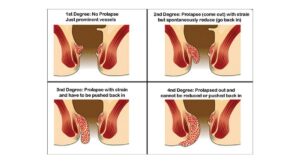
Treat your symptoms according to the stages. If you have just started to experience it, ensure to take remedial measures at home. Use over-the-counter stool softener syrups which can help add bulk to the stools and keep them soft. However, if symptoms continue or return repeatedly, medical treatment from a trusted colorectal doctor may be required for complete and lasting relief.
If you are experiencing persistent discomfort or rectal bleeding, understanding the specific piles symptoms you are facing is the first step toward finding relief, as identifying these signs early can help you distinguish between a temporary irritation and a condition that requires professional medical intervention.
What can be mistaken for piles?
As explained above, piles often present as bleeding, pain in the anal area, and a noticeable lump in the anal hole. Several other anal and rectal conditions also have similar symptoms, making it completely natural for other conditions to be mistaken for piles. This also means that self-diagnosis can often be misleading.
Below are few conditions which are relatively common, but can be mistaken for piles because of overlapping symptoms. In table, the overlapping symptoms are highlighted in bold, and can be easily understood why it is natural for mistaken for piles.
|
Overlapping symptom |
Name of the condition |
Explanation |
|
Involves protrusion or lump |
Skin tags |
Skin tags are benign growths of skin. They look like a prolapsed haemorrhoid, but are painless and do not throb/pain like a pile. |
|
|
Rectal prolapse |
Here, the lining of the rectum slips out of the anal hole. It looks very much like a large haemorrhoid, but it is the entire rectal lining/wall, and not just the portion of a vein. |
|
|
Anal warts |
These are small bumps, mostly pinkish coloured. They are caused by a virus (HPV). Unlike piles, anal warts spread easily. |
|
|
Anal polyps |
These are benign growths, generally in the intestinal walls. They can sometimes protrude out of the anus and can even bleed. |
|
Involves pain and bleeding |
Anal fissures |
This is a small tear in the anal lining. The pain is sharp and intense, and can be confused as piles. |
|
|
Inflammatory bowel disease |
A few conditions where the intestines are chronically inflamed—like Chron’s disease or Ulcerative Colitis cause bleeding and discomfort. But unlike piles, they also cause abdominal cramping and diarrhoea. |
|
|
Anal fistulas |
When a pocket of pus (abscess) does not drain out, a small tunnel or fistula is formed by the body to drain it out. This causes throbbing pain, and swelling. |
|
|
Colorectal Cancer |
Can cause bleeding, change in bowel consistency and habits. Bleeding maybe confused as piles. |
As can be easily seen above, many other colorectal conditions can seem like it is piles. if you have persistent pain, swelling, or bleeding, the safest way out is to get a proper medical examination from a certified colorectal expert.
What are the warning signs of piles?
A high-fibre diet, and adequate water intake can help cure piles completely in the starting stage. But what if it reoccurs? There are many warning signs of piles to know when it is time to visit your doctor.
Always remember, piles are more common than you think. It is completely natural to feel hesitation in speaking about it, or admitting that you are facing symptoms of piles. What matters is knowing that experienced doctors ensure complete privacy and a non-judgmental approach throughout your treatment. This is exactly what the colorectal consultants at Smiles Gastroenterology Centres in Bangalore aim for every day. They ensure to be patient centric and treat each case differently. They also ensure complete privacy with each treatment. With timely care and advanced techniques here, piles can be managed effectively and treated for lasting relief.

Dr. Parameshwara CM is a global authority in Coloproctology and the visionary founder of SMILES Hospitals, with an extraordinary track record of over 50,000 successful surgeries. A true pioneer in the field, he was the first to introduce Advanced Laser Piles Treatment and sophisticated procedures like LIFT, VAAFT, and STARR to Karnataka, revolutionizing the way digestive disorders are treated. He combines surgical precision with state-of-the-art laser technology to offer bloodless, minimally invasive solutions. Call us: +9108099008800 for further help.
- Dr Parameshwara CM

- Dr Parameshwara CM
- Dr Parameshwara CM
- Dr Parameshwara CM