

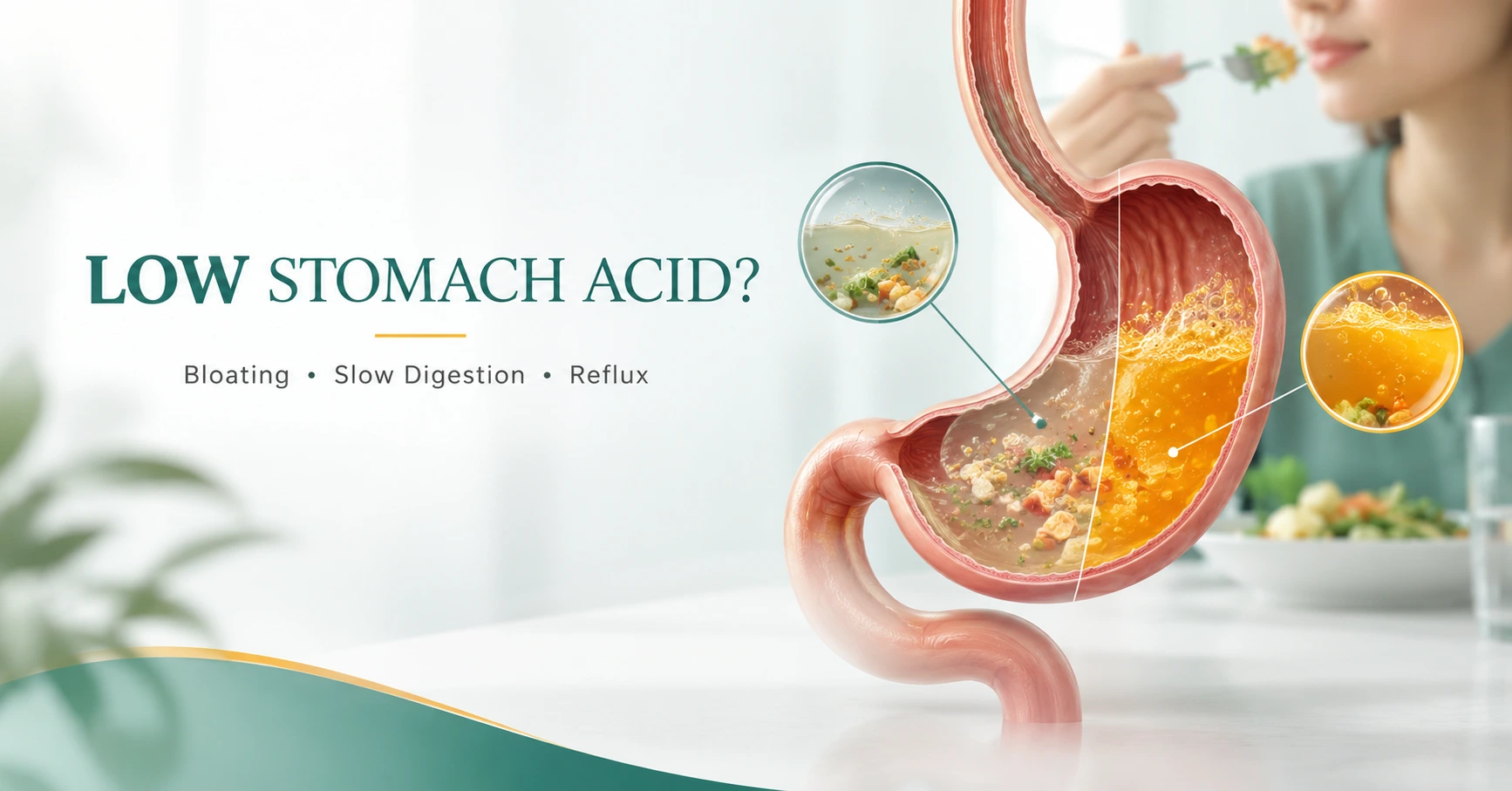
Over millions of years, the human body has developed the ability to adapt across its every functional system. Over the millions of years, right from the era of early humans, our nervous system has learnt to continually process new sensory inputs like sound, light, and touch; our neural pathways continuously evolved to handle speech, complex learning, and technological innovation—even right now your neural pathways are learning continuously about new innovations like artificial intelligence. Similarly, our digestive tract has been continuously evolving to adapting a huge diet range as early humans moved from raw foods to include salt, sugar, and oils.
Then came the industrial era which introduced refined foods, chemical preservatives, and artificial additives at a speed that outpaced our body’s evolutionary change. While our digestive systems attempt to adapt to these new inputs, the strain can be seen as gastrointestinal distress—leading to food intolerances, slow digestion, acid reflux, and low stomach acid.
Even with our incredible capacity to adapt, how can we often feel so bloated, feel sluggish digestion so often? Read on to learn how feeling full for hour together may actually be low stomach acid symptoms in disguise, and effective ways to overcome it.
What happens when your stomach does not produce enough stomach acid (Hypochlorhydria)?
- All the food you eat goes through a digestive response by the body. In this response, the food travels through the digestive system, and is primarily broken down and digested in the stomach.
- The stomach digests food with the help of many enzymes, and also majorly an acid called hydrochloric acid (HCl). This powerful acid creates a highly acidic environment inside the stomach, so that even the toughest of foods can easily turn into liquid (called chyme) for easy digestion.
- This acid production is one of the most important steps needed for digesting the bigger chunks off food.
- When your body makes lesser hydrochloric acid, it results into an avalanche of failed digestive steps. The condition is called hypo (less) chlorhydria (hydrochloric acid).
- Processes that cannot happen if there is low acid production (hypochlorhydria):
- Your body cannot digest or absorb protein, vitamin B12, iron, and other minerals which results in long-term anaemia, muscle loss, and osteoporosis.
- Since your body now has a lot of undigested food, it passes into the small intestine, where it can ferment and cause Small Intestinal Bacterial Overgrowth (SIBO).
- Stomach acid helps your immunity by acting as a shield against any bad microbes in the food you ingest. Low acid weakens this function, and makes your gut vulnerable to bacterial infections like H. pylori (causing gastritis and ulcers).
- No effective containment of stomach contents. The valve separating the stomach and food pipe relies on high acidity to seal tightly. If acid levels are low, the valve stays loose, allowing stomach contents to travel upward.
- Stomach acid in the chyme signals the pancreas to release digestive enzymes and the gallbladder to release bile—both functions are needed for breakdown of fats and other essential nutrients. Hypochlorhydria often also means that these secretions are lowered, causing essential nutrient losses in the body.
Can low stomach acid mimic the exact symptoms of acid reflux?
Very paradoxically—yes, one of the symptoms of low stomach acid is feeling like you may be having more acid levels because of all the acid reflux symptoms you notice.
Low stomach acid symptoms which are common with acid reflux:
- A burning sensation or discomfort in your chest and throat, especially after eating or when lying down.
- Frequent sour or bitter taste in your mouth from food and fluid traveling back up your food pipe.
- Upper abdominal bloating, belching, and a feeling of heavy fullness right after meals.
However, the ‘acid-reflux’ you notice in case of low stomach acid production is because of a very different reason.
How low stomach acid can cause acid-reflux:
- Your oesophagus or food pipe has an entry point (connecting mouth to food pipe) and exit point (connecting pipe to stomach). Both these points have valves (like doors) which control food movement through it.
- The lower valve—near the exit point and above the stomach, opens and closes based on the stomach acid level. When it senses strong stomach acid (generally when you have eaten) this valve closes.
- When the valve closes, no food can come back up into the food pipe.
- However, when the stomach acid is low, this valve does not get the strong signal it needs, leaving it slightly open always.
- Low stomach acid also results in undigested food in the stomach which can sit there for longer time and ferment.
- Fermentation results in gas and pressure which can easily upwards. This upwards pressure also pushes the stomach contents into the food pipe—which is now undigested food with stomach acid.
- Many times, even a small amount of stomach acid in the food pipe can make you feel a strong burning sensation, since after all, hydrochloric acid is a strong acid.
How can chewing your food thoroughly increase enzyme production naturally?
Chewing is also called as mastication in medical and scientific terms. It is often the first step of the digestive response of the body.
A beautifully summed up review published in 2025 https://pmc.ncbi.nlm.nih.gov/articles/PMC12348602/ shows how chewing matters.
Here, Lettieri and group report that chewing is an important trigger that regulates digestion, balances oral and gut bacteria, and ensures proper nutrient absorption. They use numerous studies which show how these functions are compromised when there no ‘act of chewing’.
When the chewing ability declines, it sets off a domino effect of poor enzyme release, gut microbial imbalance (dysbiosis), and severe nutritional deficiencies.
Chewing is mainly a mechanical movement of jaws, with the tongue helping to move the food around.
However, how can just chewing food have such a huge impact on the digestion, let’s have a look:
The chewing act helps at two levels: the mouth and the brain.
The Mouth: Local Chemical Activation
The moment your teeth press into food, it activates receptors in your mouth, while your taste buds detect the chemical signals of what you are eating. These sensory signals ultimately activate your major salivary glands to produce enzymes like salivary amylase and lingual lipase.
The Brain
Chewing does not just produce enzymes in the mouth—it also acts like a heads-up signal for your entire digestive tract before the food even leaves your mouth. This is known medically as the cephalic phase of digestion:
Vagal Nerve Stimulation: The feeling of chewing with all the pressure, texture, and flavor—fires signals along the vagus nerve (a major neural pathway connecting your brain to your stomach).
Gastric Acid & Pepsinogen Release: These neural signals your stomach lining to release enzyme pepsinogen—the precursor to pepsin, your body’s primary protein-digesting enzyme. Simultaneously, hydrochloric acid (HCl) is also made to create the acidic conditions for converting pepsinogen into pepsin.
Pancreatic activation: The vagus nerve simultaneously signals your pancreas to start churning out digestive enzymes like pancreatic amylase, lipase, and trypsinogen. This pours into your small intestine to get it ready for the chyme from the stomach.
How less chewing leads to low stomach acid production and poor nutrient density:
When you rush through meals or swallow unchewed chunks, this finely tuned biological chain reaction breaks down:
- Muffled neural signals: Hurried chewing does not give your mouth receptors enough time to stimulate the vagus nerve. The result? A weak signal from the vagus nerve to the stomach, leading to low stomach acid and weak enzyme release.
- Starving the Body of Nutrients: Low stomach acid and weak pancreatic enzyme levels fail to break complex food into its basic nutrients like fats, carbohydrates, proteins and other minerals. Thus, you small intestine cannot extract the vitamins and minerals. Over time, even if you eat a nutrient-rich diet, inadequate chewing leads to severe nutrient deficiencies—including low B12, anemia, poor iron uptake, and muscle loss.
Which natural foods contain active enzymes that aid digestion?
There are several fresh and fermented foods which contain their own digestive enzymes. This eases digestive burden on your stomach and can in fact help with low stomach acid symptoms.
| Food | Active enzymes in them | What it helps digest |
| Pineapple | Bromelain | Proteins |
| Papaya | Papain | Proteins |
| Kiwi | Actinidain | Proteins |
| Mango & Bananas | Amylases | Carbohydrates |
| Avocado | Lipase | Fats |
| Kefir & Raw Yogurt | Lactase | Lactose (Sugar) |
| Sauerkraut & Kimchi | Proteases, Amylases, Lipases | Mixed Nutrients |
| Raw Honey | Invertase, Diastase, Amylase | Complex Sugars |
| Ginger | Zingibain | Proteins |
In today’s fast-paced world, our eating habits have changed significantly from the natural evolutionary pathways built over millions of years. Hyper-processed, ultra-refined foods coupled with modern lifestyle habits like mindless binge-eating while scrolling or watching TV creates a perfect storm for your digestive system. When you swallow unchewed food without giving your brain and mouth the time to signal the vagus nerve, your stomach misses its important signals to produce sufficient hydrochloric acid. Over time, this lack of stimulation leads to low stomach acid levels, and sluggish digestion.
However, low stomach acid, acid reflux, gastritis, and delayed gastric emptying share many symptoms—such as burning, bloating, pressure, and reflux—it can be nearly impossible to pinpoint the root cause on your own. Self-treating acid reflux from low stomach acid with antacids (which work by neutralizing stomach acid) can worsen your gut health. For an accurate diagnosis, it is best to consult experienced gastroenterologists like the specialists at Smiles Institute of Gastroenterology, Bengaluru. They can identify the precise cause of your symptoms, and build a targeted care plan to restore your digestive health.
Frequently Asked Questions:
1.Can low stomach acid cause slow digestion?
Yes, stomach acid is important for breaking down larger food chunks into more a more digestible form. If stomach acid levels are low, this breakdown slows and so does the entire digestive process.
2.Can slow digestion cause acid reflux?
Yes, low stomach acid results in food staying in the stomach for a longer time than normal. When this happens, the food gets fermented in the stomach causing gas and pressure. When the gas and pressure escape through the food pipe, it can force some of the food mixed with the stomach acid to travel upwards into the food pipe. Upon contact of the acid and food pipe, you feel a burning sensation, and can identify this as acid reflux.
3.Why is my stomach digesting so slowly?
Digestion depends a lot on the acid levels in your stomach. When your stomach produces insufficient acid (hypochlorhydria), it cannot properly break down food particles or activate essential enzymes like pepsin. When food remains undigested, it cannot enter the small intestine till it becomes chyme (liquid digested food formed from stomach digestion). As a result, food sits in your stomach longer than it should, causing prolonged heaviness, severe bloating, and slow, sluggish digestion after meals.
4.Is it possible to have acid reflux without having high stomach acid?
Yes, even low stomach acid symptoms (hyperchlorhydria) involve gastric reflex as an important symptom.
5.How can I permanently fix low stomach acid?
Permanently fixing low stomach acid will involve retraining your stomach to produce more acid through long-term dietary and behavioural habits rather than quick fixes. You can restore healthy acid levels by thoroughly chewing every bite to stimulate sensory receptors and vagal nerve signals, and naturally supporting digestion with enzyme-rich whole foods like raw papaya, pineapple, and fermented vegetables.
6.What are the best natural foods for boosting active digestive enzymes?
Fortunately, there are natural steps to help restore your slow digestion and relieve you of low stomach acid symptoms. The best natural remedies to boost stomach acid include apple cider vinegar diluted in warm water before meals to immediately lower stomach pH, and liquid digestive bitters or warm ginger tea to stimulate vagal nerve signals for increased acid and enzyme secretion. Additionally, consuming zinc-rich foods like pumpkin seeds, lentils, and lean meats provides the essential mineral needed by stomach parietal cells to produce hydrochloric acid.
