

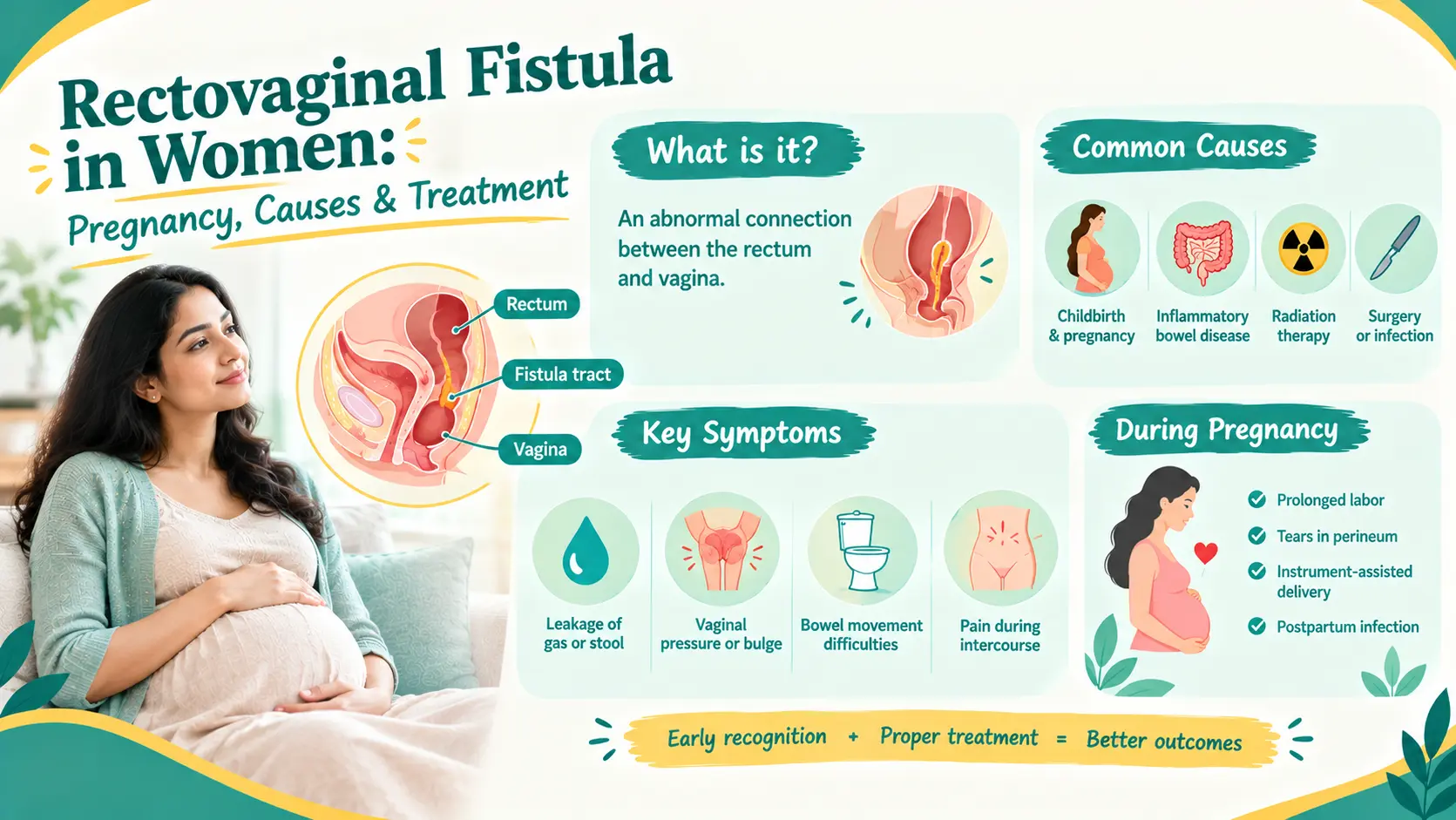
Anal fistula is a very common term used by a colorectal or gastroenterology specialized doctors. This is because fistula is relatively common occurrence, especially in men of 2060 years of age. However, this does not imply that women are exempted. In fact, about 50,000–100,000 women are affected by fistula every year, this number being most prevalent in developing countries like India. Although fistula in women develop for different reasons compared to men, the condition is equally painful, distressing, and significantly disruptive to daily life.
In women, obstetric or childbirth is one of the main causes of fistula. Due to improper recovery, abnormal passageways easily form between the vaginal canal and neighboring structures—primarily the urinary tract or the rectum.
The postpartum phase, also known as the fourth trimester, brings huge physical challenges with it—developing a rectovaginal fistula (RVF) (tract/tube from vagina to the rectum) is one of them. Due to the symptoms associated with this, such as involuntary gas/ stool leakage from the vagina, many women hesitate to speak out about it. However, knowledge is the powerful beginning. In this article, we will explore rectovaginal fistulas specifically in and around pregnancy, so you can feel more confident of any symptom you may be facing.
What Causes a Fistula Before Pregnancy?
There are many other reasons that can develop a rectovaginal fistula in women independent from childbirth reasons. Most fistulas in women are observed in the reproductive years of 15—50 years of age.
Understanding these pre-existing conditions is important, as rectovaginal fistulas in women are shown to have a significant impact on their gynecological health, sexual life, and thus, pregnancy.
Some of non-pregnancy and non-obstetric related causes of fistula in women are:
Inflammatory Bowel Disease: Inflammatory Bowel Disease is an umbrella term used for long-term inflammatory conditions of the digestive tract, like Crohn’s disease and Ulcerative Colitis. Among these, Crohn’s disease is the most common non-obstetric cause of rectovaginal fistulas as it causes deep tissue inflammation through major parts of the digestive tract and surrounding tissues. When this inflammation goes through the rectal wall and adjacent vaginal tissue, an abnormal tract forms.
- Pelvic Cancer: Colorectal, cervical, vaginal, or uterine cancers can grow into neighboring structures. Any untreated cancerous tissue can break down the tissue separating the vagina and rectum to create a fistula.
- Radiation Therapy: Radiation therapy used to treat any cervical, uterine, or anal cancers can damage healthy surrounding tissue alongside cancer cells. This damage shows up even years after radiation treatments end, gradually causing tissue breakdown and fistula formation.
- Surgical Trauma: Any gynecological, or anorectal surgeries can weaken or injure the rectovaginal septum separating the rectum and vagina. Hysterectomies, rectocele repairs, or surgeries for endometriosis carry a risk of accidental tissue perforation or impaired healing, which can evolve into a fistula.
- Anal Infections and Perianal Abscesses: Infections originating in the anal glands over a long time can lead to a localized collection of pus known as a perianal or anorectal abscess. If an abscess goes untreated, the infectious fluid is drained out by a fistula formed by the body. In women, this tube/fistula tract can sometimes go through the vaginal back wall and open into the vaginal canal, resulting in rectovaginal fistula.
Fistula in Pregnancy: What Expecting Mothers Need to Know
Since obstetric fistulas are the most common type in women, equipping yourself and your family with this knowledge is one of the most powerful steps you can adopt as an expecting mother. Below is curated and actionable information on pregnancy- and childbirth-related rectovaginal fistulas.
How can labor and delivery result in rectovaginal fistulas:
Prolonged or Obstructed Labor (Ischemic Injury): Labor time varies for all women. However, when it goes on for too long without medical intervention, the baby’s head can get pressed tightly against the mother’s pelvic bone. This pressure can cut off blood supply to tissues like the rectovaginal septum, making it vulnerable to tears, which can eventually lead to a fistula.
- Severe tears in the perineum: During delivery, natural tearing can extend till the anal muscles. During postpartum, if the tears undergo breakdown, infection, or incomplete repair a fistula tract can form.
- Instrument-Assisted Deliveries and Episiotomies: Forceps, and vacuum extraction are sometimes necessary to safely deliver the baby. However, they can risk fistula formation due to tears in the nearby tissues.
- Postpartum Infection or Wound Breakdown: Even after a prompt repair of delivery tears, wound infection or blood clots can cause the healing tissues to break down leaving an open channel between the rectum and vagina.
Risk Factors to Be Aware of as an Expecting Mother About Obstetric Fistulas
There are certain factors shown to increase likelihood of experiencing tissue trauma during or after labor, thereby increasing the risk of rectovaginal fistula in pregnancy:
- Prolonged Labor: Limited access to timely obstetric care or delayed C-sections significantly elevates the risk of pelvic tissue damage. This is one the man contributing factors to developing countries showing a high number of fistula cases in women.
- First-Time Deliveries: First-time mothers experience longer labor stages due to a tighter pelvis, which slightly increases the likelihood of perineal tearing.
- Large Baby: Delivering a baby with a higher birth weight puts more mechanical pressure on the vaginal and perineum tissues during delivery.
- Instrumental Delivery: Due to higher rates perineal tears, instrumental deliveries often can risk fistula formation.
- Pre-existing Inflammation Conditions: Conditions like Crohn’s disease or prior pelvic surgeries weaken pelvic tissues, making it harder for tears during delivery to heal properly postpartum.
Post-Pregnancy Fistula: Tears and Recovery
Perineal tears resulting in fistulas?
During vaginal delivery, the perineal tissue undergoes significant stretching. While first- and second-degree tears are very superficial, third- and fourth-degree tears are can go from the vaginal tissues all the way to deep rectal tissues.
Thus, in spite of the tears being stitched back thoroughly, the tissues still need to heal back completely. Till the tissues heal completely, if the wound experiences any infection, clotting , or mechanical strain in the recovery days, the repaired tissue edges can again separate. As the tissue breaks down again, an abnormal epithelial tube can form between the rectum and the vaginal, resulting in a rectovaginal fistula.
Identify the early warning signs in the “Fourth Trimester”
The post-partum journey brings a lot of physical changes, such as changes in stool movements, hunger, and other gastro relates symptoms. However, if you do notice a combination of the following symptoms, do report to a certified colorectal doctor for prompt treatment.
- Involuntary Leakage: Passing gas or solid stool through the vagina, particularly after a bowel movement.
- Unusual Vaginal Discharge: Persistent, foul-smelling, or fecal-stained vaginal discharge that persists despite routine hygiene.
- Perineal Pain & Swelling: Localized throbbing pain, redness, or swelling around the perineum or suture line that worsens over time.
- Recurrent Infections: Frequent urinary tract infections (UTIs) or persistent vaginal irritation caused by fecal bacterial contamination.
Immediate Care and Tissue Protection
When an obstetric fistula is identified in the immediate postpartum period, your doctor may focus on repairing the surrounding fragile and healing perineal tissue before repairing a fistula tract. This initial management involves conservative approaches like:
- Gentle Perineal Hygiene: Using warm sitz baths 2 to 3 times daily to keep the perineal area clean, and soothe inflamed tissues.
- Complete rest from any heavy work: Lifting heavy objects, intense household chores, or returning to strenuous physical activity too soon is a big no-no to allow complete tissue healing.
- Preventing Constipation: Passing hard stool or straining during bowel movements puts pressure on the healing tissue. By using prescribed laxatives, you can avoid re-tearing of the tissue and fistula formation.
- Traditional Nutrient-Dense Diet: Postpartum nutrition plays a vital role in tissue regeneration. Traditional Indian recovery foods like yellow moong dal khichdi, paneer, and bone broths supply easily digestible proteins necessary for collagen synthesis. Healthy fats like ghee, gond (edible gum) laddoos, dalia, and warm jeera-ajwain water keeps bowel movements soft while restoring overall physical stamina.
What Are the Common Symptoms of a Vaginal or Anal Fistula in Women?
In women, the rectum and vagina are well separated by the rectovaginal septum—a vertical muscle layer separating the two canals. When a fistula is present connecting the two canals—vaginal and anal canal, contents in the rectum can easily pass into the vaginal canal. Hence, the severity and complexity of RVF symptoms depend largely on where and how the fistula is formed in between the two organs.
Common symptoms women face if there is a RVF are:
- Involuntary Passage of Gas or Stool via the Vagina: This is the hallmark symptom of an RVF. Depending on the size of the fistula, patients may notice gas or even stool (fecal matter) leaking through the vaginal opening.
- Foul-Smelling Vaginal Discharge: A persistent or foul-smelling vaginal discharge is very common with RVF due to fluid drainage from the fistula tract.
- Recurrent Vaginal & Urinary Tract Infections (UTIs): With fecal matter, bacteria also enter the vaginal canal which often leads to frequent, and persistent (recurring even after antibiotic treatments) vaginal or urinary tract infections.
- Pain & Discomfort: The presence of a physically formed tract, and also the underlying infections can make women feel a deep pelvic pain which worsens during sexual intercourse or during bowel movements.
- Skin Irritation: Due to stool and moisture drainage constantly it leads to severe irritation, redness, and burning, around the vulva, perineum, and thighs.
While facing a rectovaginal fistula in or after pregnancy can feel deeply distressing, it is important to remember that you do not have to suffer in silence, and full healing is completely possible. Obstetric fistulas are known well-medical conditions with established pathways for care. All your healing requires is an early consulta and clinical guidance from gastroenterologists and colorectal specialists, and gentle patience with your body. Notice any symptoms from this article—do not hesitate to contact empathetic specialists at Smiles institute of Gastroenterology, Bengaluru. Childbirth is a profound journey, and taking proactive steps toward your own healing is the most empowering gift you can give to yourself and your growing family.
Frequently Asked Questions (FAQ):
What is the main cause of fistula?
The primary cause of a rectovaginal fistula in women is obstetric/childbirth trauma resulting from prolonged labor or severe perineal tearing during delivery. Non-obstetric causes are associated with inflammatory bowel diseases, particularly Crohn’s disease, being the leading non-pregnancy-related cause.
How does a woman get a fistula?
A woman develops a rectovaginal fistula when sustained tissue pressure during childbirth, severe tearing, surgical injuries, or infections that causes the thin tissue wall between the rectum and vagina to break down. As this tissue fails to heal properly, an abnormal passageway or connecting tube forms between the two organs.
What are the types of fistula in females?
In women, pelvic fistulas are based on the organs they connect: rectovaginal (between the rectum and vagina), anorectal (between the anal canal and perianal skin), and urogenital fistulas, such as vesicovaginal (between the bladder and vagina).
Can a fistula affect pregnancy?
Yes, an active or recently repaired fistula requires careful management during pregnancy to prevent infection, and protect tissue healing. Having a history of a rectovaginal fistula often influences delivery planning, with an elective Cesarean section as the most recommended option to safeguard the any fragile pelvic tissues from future damage.
