

Nowadays, there is absolutely no lack of diet or health advice- be it online or offline. Every other turn of the road shows you a new miracle powder, tablet, or syrup for “cleaning your stomach” and the wellness world is flooded with endless cleanse diet or detox programs. This would almost make it seems like your gut stores up junk for days, and you need to treat it as a dirty kitchen sink that needs scrubbing.
But your gut and body are much more complex than that, with your gut hosting its own living ecosystem with all the gut bacteria in it, and moving and talking to your brain actively through the gut-brain barrier.
Thus, understanding your gut health is more than just prefixed diet regimes, it comes down to listening to its physical cues. Let us look at what a healthy gut actually feels like, how to recognize overload, and the tangible signs that your digestive system is finally healing.
What Does a toxic or Overloaded Gut Actually Feel Like?
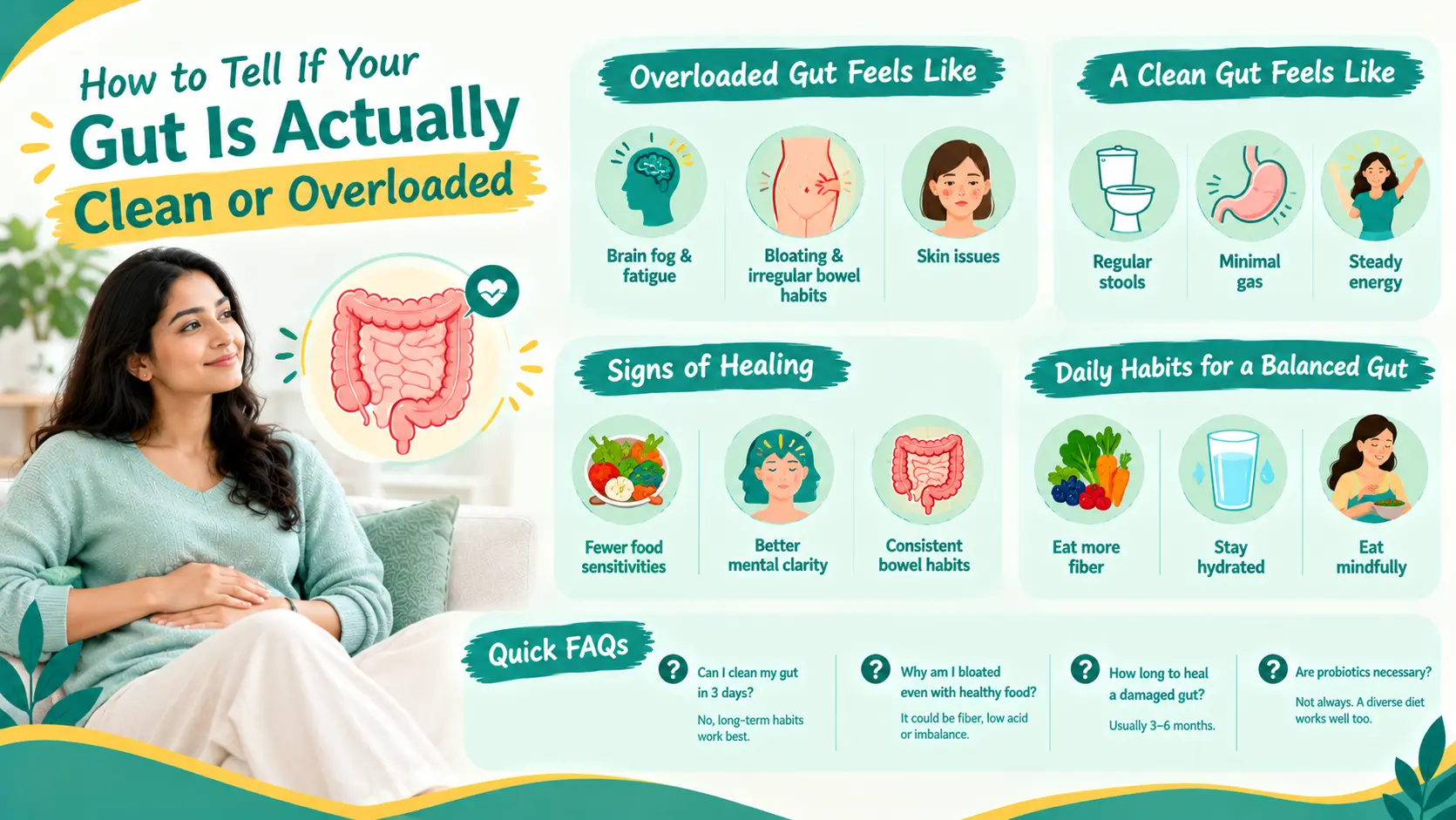
Most toxins in the body are promptly filtered out by the liver, hence, there is no such thing as a toxic gut. However, a gut that is inflamed, or struggling with poor motility is said to be overloaded and distressed. An overloaded gut feels like:
- A vague brain fog: remember how to gut and brain talk to each other? Feeling a constant, heavy brain fog and fatigue—spiking right after eating, signs of a distressed gut and is caused by gut-driven immune activation.
- Uncomfortable bloating: A bloated stomach happening throughout the day shows trapped gas, and unpredictable bowel habits (alternating constipation and diarrhea). Both are signs of ineffective gut movement issues due to an inactive gut.
- Skin issues: Acne, eczema, or redness randomly flaring up with no known cause is linked to the gut inflammation. Gut causes skin issues? Yes, long-term intestinal inflammation causes the inflammatory molecules to spill over and affect skin too resulting in issues.
How to know if your gut is clean and functioning well
You know you have a clean gut when your body does the following:
- Regular stools: Having one to two soft and bulky, easy-to-pass bowel movements a day without straining is a huge indicator that the intestinal movements are optimal and efficient.
- Minimal gas: those normal sounds you hear from the gut—they are healthy digestive sounds indicating healthy intestinal movement. This should lead to occasional gas without cramping, or burning; all indicating a happy gut.
- No post-meal fatigue: Having steady post-meal energy levels without afternoon crashes indicate healthy gut neurotransmitter production.
How Do I Know If My Gut Is Healing?
Healing a damaged gut lining is possible using natural measures, but takes patience as you listen to your body. Some indicators that your gut is healing are:
- Fewer food sensitivities: Foods that used to trigger bloating or cramps now get digested comfortably.
- Improved mental clarity: reduced brain fog and a more stable mood reflects that your gut is communicating smoothly with your brain.
- Good bowel habits: Stool movements become more predictable in consistency, and time.
Some simple daily habits to keep your gut clean and balanced
Small sustainable daily habits practiced consistently overtime can build stronger guts than any cleansing syrups or powders.
- Binge on fiber: Feed the beneficial gut bacteria a wide variety of colorful vegetables, fruits, seeds, and grains. Nothing can replace the benefit of eating natural fibers consistently.
- Water up: Drink plenty of water to maintain the mucosal layer that protects your intestinal wall. Remember a healthy intestinal wall is as supportive to hosting good gut bacteria as fiber is.
- Eat mindfully: Chew thoroughly while avoiding eating under stress. This one habit can signal healthy digestion right from the mouth till the gut.
Frequently Asked Questions (FAQs)
Can I completely clean my gut in 3 days?
No. 3-day juice cleanses or detox kits do not help with resetting your overloaded gut. Your liver and kidneys are the primary detox centers of the body. Long-lasting gut health is possible only through long-term mindful nutrition, stress management, and diverse fiber intake.
Why do I feel bloated even though I eat healthy foods?
Foods like beans, lentils, cruciferous vegetables, and whole grains contain high amounts of fiber. Low stomach acid and imbalanced gut bacterial population can lead to fermentation of those healthy foods resulting in excess gas and bloating.
How long does it take for a damaged gut lining to heal?
A damaged gut lining typically takes anywhere from 3 to 6 months of consistent anti-inflammatory food intake, stress regulation to fully repair.
Is daily probiotic supplementation necessary for a healthy gut?
While high-quality probiotics can help during the gut in short term, a diverse diet rich in fermented foods (like curd, traditional Indian fermented pickles, and kanjis) often do a better job of keeping the supportive gut bacteria alive than eating probiotic supplements.
