

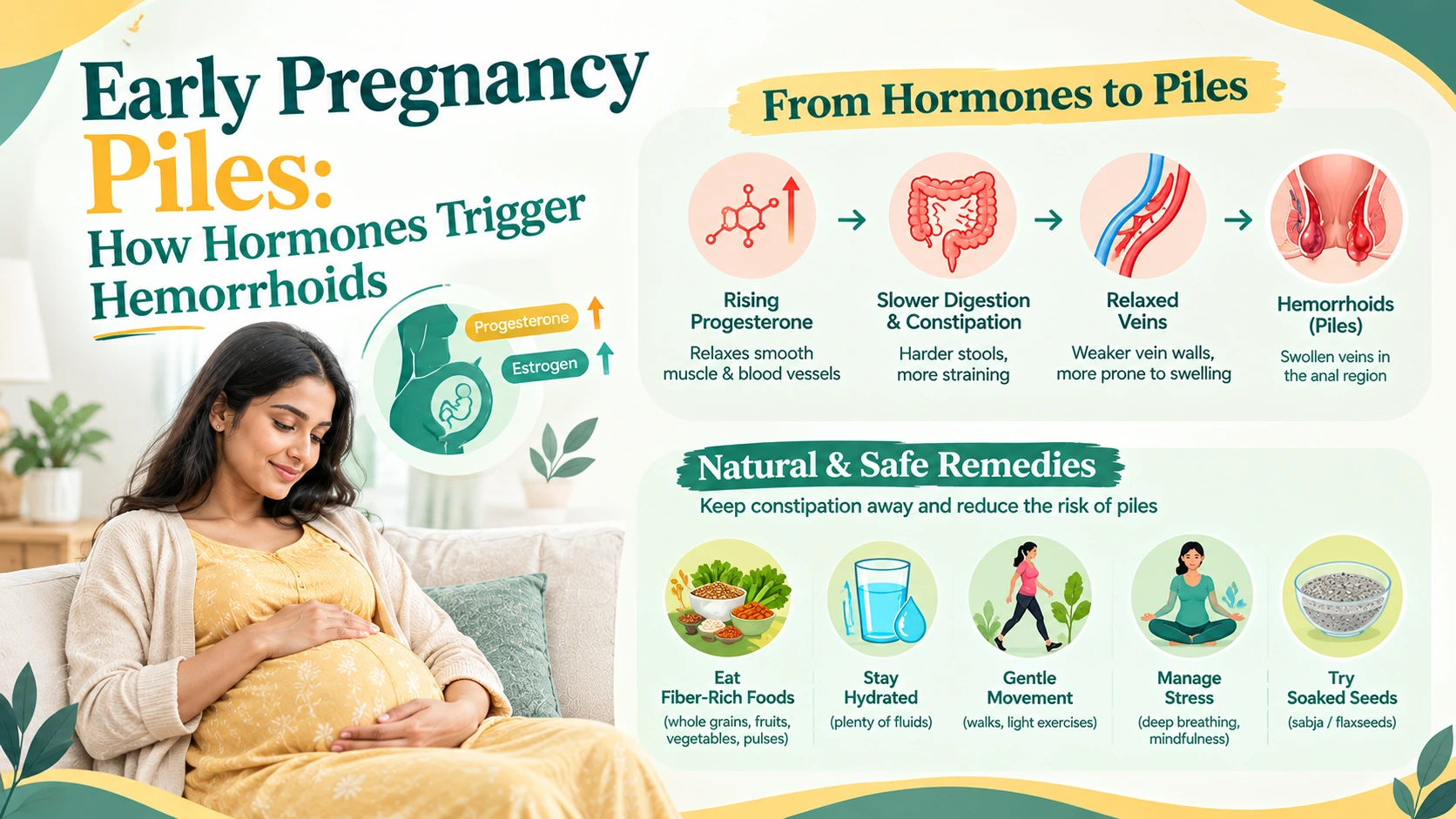
Pregnancy and hormonal changes are well-known to go hand-in-hand, from the beginning of conception till delivery. Hormonal changes are extremely important as they are hugely responsible for optimizing changes in the mother’s body to support the baby’s growth.
However, the effects are not just limited to the uterus housing the growing baby. These hormones show their effects on other nearby organs too—the most prominent effects being observed in the digestive tract. Because of their systemic (whole body) effect, there are a whole lot of conditions which can develop during pregnancy and get cured following delivery. In this article, we focus on one such condition—piles; specifically, during the third trimester, the most common phase of pregnancy where so many other conditions develop.
While symptomatic haemorrhoids occur in roughly 8–10% of women during the first trimester and rise gradually to around 15–20% in the second trimester, the numbers surge steeply as pregnancy reaches its final stretch. By the third trimester, anywhere between 25–40% (with some clinical reports observing up to 85% of late-stage pregnancies) having piles as a side effect. Let us see how long these piles can last for, and can they be prevented?
How do pregnancy hormones like progesterone weaken blood vessel walls?
Progesterone is a hormone which shows a steady incline in its levels during pregnancy. It reaches an all-time high by the third trimester. Very co-incidentally, progesterone is also the main culprit behind the formation of haemorrhoids during pregnancy.
How can a hormone involved in pregnancy result in digestive issues and piles?
- The natural function of progesterone is to thicken the lining of your uterus. A thick uterine lining is more supportive to implant any fertilized egg.
- Once the embryo (fertilized egg) is implanted safely onto the uterine walls, progesterone relaxes the uterus muscles (which are smooth muscles). This prevents any contractions, and therefore displacement of the embryo.
- However, progesterone does not work on the uterus alone—it also acts systemically throughout the body. The walls of your blood vessels (especially veins) and your digestive tract are also composed of smooth muscle tissue.
- Progesterone causes these vascular smooth muscles also to relax, and the walls of the veins soften and stretch. This reduces their structural strength, making it harder for blood to flow efficiently back to the heart.
- Very often, blood pools in the lower limbs and pelvic area. This condition is called as venous stasis.
How does this relaxation cause swollen rectal and anal veins?
- As explained above, the effects of progesterone are not limited only to the uterus. There is also some spill-over happening to the surrounding organs—which is the intestine/gut region. Progesterone also exerts its effects here, and relaxes the smooth muscle walls of the intestines.
- However, the intestines function most effectively only when it moves in a wave-like motion called peristalsis. This movement helps to move the food along, digesting it along the way. Once digested, the waste is also pushed out into the rectum and anus by peristalsis.
- When progesterone relaxes the smooth muscle walls of the intestine, this peristaltic movement is reduced significantly. This makes digested waste/stools stagnant in the intestine.
- Stagnant stools allow for increased water re-absorption from it, effectively making it hard and dry.
Why does increased pelvic pressure during the third trimester cause swollen veins?
Unlike the indirect muscle relaxing effect of progesterone, a heavy and full uterus directly causes swollen veins through physical mechanisms.
- Increased uterus weight: By the third trimester, the baby, placenta, and amniotic fluid combined weigh several kilograms. The entire load rests directly on the pelvic floor and the surrounding blood vessels.
- Squeezed veins: This weight also presses down on the inferior vena cava—the large vein that carries blood from the lower limbs and pelvis back up to the heart. Squeezed veins creates directly implies that the blood moving up from the lower body encounters resistance (much like a sudden narrowing of a garden hose pipe), making blood flow slower back to the upper body.
- Rectal and anal veins are pushed downwards: Because the delicate blood vessels in the rectum and anus sit at the very bottom of the pelvic cavity, gravity causes downward weight of the uterus. This forces extra blood into these delicate veins in these regions.
- Veins stretch and bulge: Veins are flexible like thin rubber tubes. When there is continuous high pressure and pooled blood, the vein walls stretch, swell, and bulge—forming haemorrhoids.
All in all, the three major changes happening in the pelvic region—relaxed veins, stagnant and hard stools due to slower intestinal movements, and the physical pressure of the heavy uterus can easily result in swollen veins or piles.
Which topical treatments and sitz baths are safe to use while pregnant?
Since it is so easy for third trimester haemorrhoids during pregnancy, taking appropriate steps to prevent and treat the swollen veins when they are at the starting stages itself can help in faster relief once the baby is out.
- Optimize sleeping positions: Sleeping or resting on your left side takes the heavy weight of the uterus off the inferior vena cava. This improves venous circulation from the lower body back to the heart and reduces pressure on rectal veins. You can also try to prop your legs up on cushions or place a wedge pillow under your hips to encourage blood flow.
Remember, sitting or standing in one position for long periods forces blood to pool in the pelvis due to gravity. Practice gentle walking every 30 to 45 minutes to keep circulation moving.
- Ensure to have smooth stools everyday: Focus on high-fiber foods such as whole grains, oats, beans, fresh fruits, and leafy green vegetables. Fiber in these foods adds bulk and softness to stools, making them easier to pass without straining.
Always pair fibre with water. Hydration works with fiber to keep stools soft and prevent constipation. Use the toilet immediately when you get the urge; delaying makes stools harder and drier. Also, take your time once you are on the toilet, do not hurry and push out the stools. Pushing them out can increase pressure on the veins and make them bulge out.
- Gentle Daily Physical Activity: Regularly contracting and relaxing the muscles of your pelvic floor—also called Kegel’s exercise, improves local blood flow, strengthens pelvic tissue support, and reduces venous blood pooling.
Also practice daily walks or gentle prenatal yoga to encourage intestinal movements and prevent stool stagnation.
- Use topical soothing relief: Soak your pelvic region in a sitz tub of warm water about 3 times a day. Warm water cleanses the area, eases anal muscle spasms, and reduces local swelling and discomfort.
You can also safely use a clean cloth-wrapped ice pack applied gently to the anal area to numb acute pain. Avoid any scented toilet paper or vigorous wiping. Use warm water, a bidet, or fragrance-free & alcohol-free wet wipes to clean after bowel movements.
How long after giving birth do pregnancy haemorrhoids typically resolve?
- Most pregnancy-induced piles resolve naturally within a few weeks.
- However severe piles can also take a couple of months following delivery.
- Once the baby is born, the intense pressure on the pelvic floor and inferior vena cava is instantly relieved, allowing blood circulation in the lower body to normalize.
- Progesterone levels also drop significantly after childbirth, which allows the vascular smooth muscles regain their natural tone and elasticity.
- All these changes coupled with helpful postpartum rest & recovery, gentle hygiene, and maintaining soft bowel movements can significantly help the swollen veins usually shrink back down and heal on their own without requiring invasive medical intervention.
Dealing with third-trimester piles can feel exhausting, especially when you are already tired from this physically demanding stretch of pregnancy. It is completely normal to feel overwhelmed by the discomfort, but remember this is a remarkably common experience shared by almost up to 80% of expecting mothers. With gentle self-care, simple lifestyle adjustments, and open communication with your doctor, you can manage the discomfort, and focus more on warmly welcoming your baby.
Frequently Asked Question
How can I prevent haemorrhoids during pregnancy?
Preventing haemorrhoids during pregnancy is one of the most effective ways to not dealing with post-partum piles. You can easily do this by loading up on fiber in veggies and fruits, pairing fiber with ample liquid intake, and using proper sleeping postures like sleeping on your left side/using a wedge under your legs.
How can I relieve haemorrhoids during pregnancy?
Even after taking all the above steps, it’s completely natural to still feel piles symptoms like sharp pain during stools, and throbbing sensation after stools. If your do find yourself feeling these, use any topical treatments like sitz baths, cold or warm compresses safely to help the swollen veins to shrink quickly and effectively.
How long do pregnancy haemorrhoids last?
For most women, pregnancy-induced hemorrhoids are temporary and resolve naturally within a few weeks to 2 to 3 months after delivery.
While swollen veins usually shrink on their own with soft stools and basic postpartum care, some piles can stay longer if you experience postpartum constipation, straining during labor, or had pre-existing hemorrhoids before pregnancy. If your symptoms cause severe pain, heavy bleeding, or do not improve after 6 to 8 weeks postpartum, consult an experienced colorectal doctor at Smiles Institute of Gastroenterology for personalized, quick and effective treatment options.
Can haemorrhoids harm my unborn baby?
No, haemorrhoids will not harm or affect your unborn baby in any way. While piles can cause significant discomfort, itching, and pain for you, they are localized only to the blood vessels in your rectum and anus. They do not cross into the uterus or placenta, nor do they impact your baby’s development, growth, or overall health.
Remember, they do not alter the blood flow to your uterus or compromise oxygen and nutrient delivery to your baby. Standard, conservative relief methods such as sitz baths, high-fiber diets, and cold packs are completely safe during pregnancy. Also, hemorrhoids during the third trimester generally does not prevent you from having a normal, safe vaginal delivery.
Your baby is well-protected inside your uterus, so you can focus on your health and getting plenty of rest during these final weeks!
