

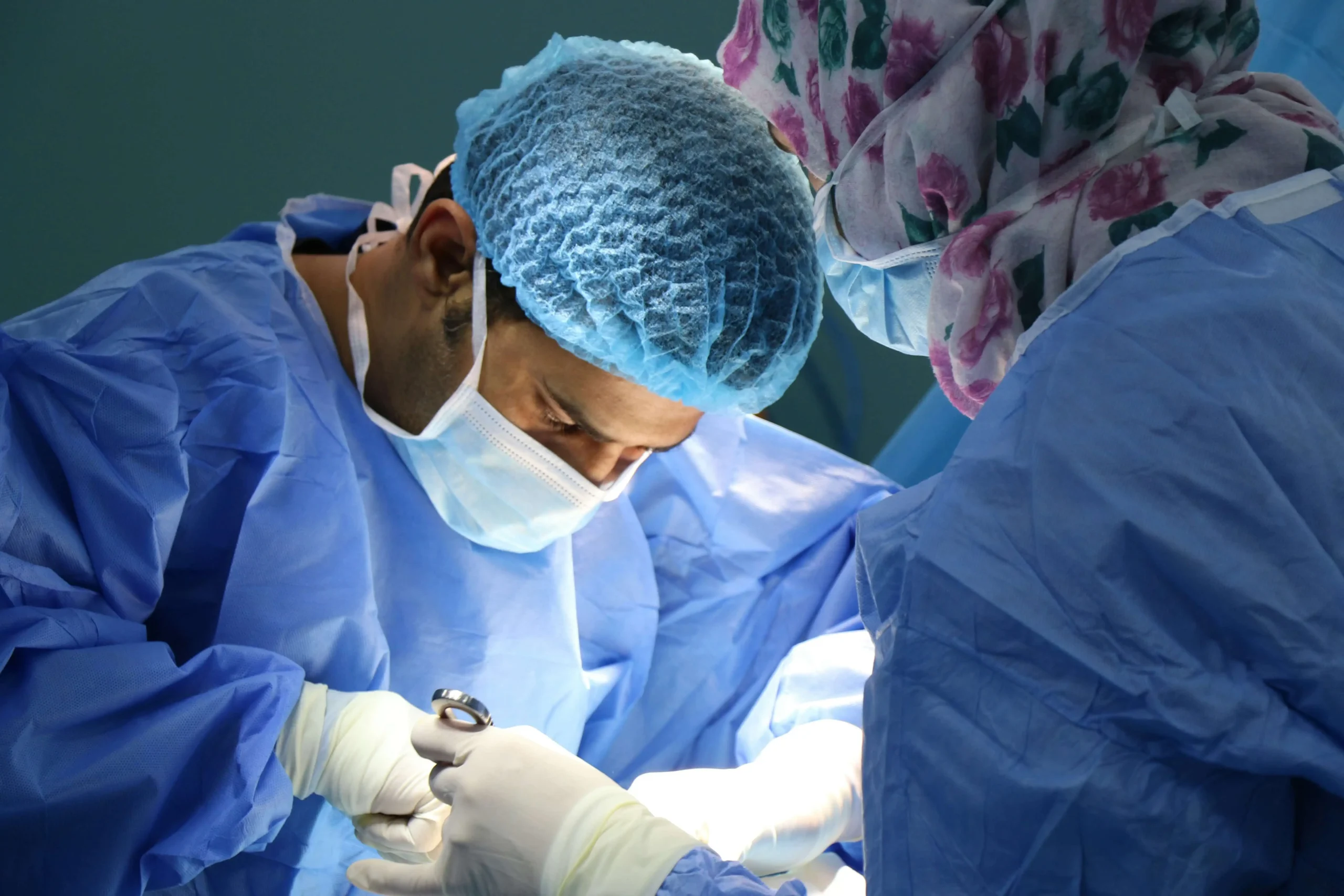
Our bodies have evolved to efficiently remove any unwanted materials from inside it. Just like how kidneys remove liquid waste, and the large intestine pushes out solid waste, even infectious materials can be expelled out through various routes.
For example, if there is a pocket of pus—or abscess— inside due to any infection, the body forms a small tunnel which opens in the skin. This tunnel connects the abscess to the outside, and helps in draining all the pus out of the body. This tunnel is called a fistula, and when it is formed in the anal region, it is an anal fistula.
When selecting the right expert, it is crucial to understand that even a simple low lying fistula requires specialized care to prevent recurrence and ensure a quick recovery, which is why finding a surgeon with a high success rate in proctology is the most important step in your treatment journey.
Anal fistulas are quite common, especially in men aged 30-50 years of age. An experienced colorectal specialist can easily help you recover from a fistula. While there are many doctors who can help you, it takes experience, knowledge, and skill to make the healing process easy and seamless. This article will guide you through tips and common questions you would naturally have during this period.
Step-by-step guide to help you find a good fistula surgeon.
- Identify the right specialist for you: Fistulas are felt as intense pain in the anal region. A general practitioner can easily identify the cause of this pain—whether it is piles, fissures, or fistula. They can also tell the cause of your condition. But to identify how complex it is, how it looks, and to decide how to treat it, you need an experienced colorectal surgeon or a proctologist.
- Find out about the numbers: A good way to find out the surgeon’s experience level is by finding out the ‘volume’ or number of procedures done in a month. You can speak to the hospital staff about this, but do not hesitate to ask the doctor directly—it gets you the best answer. In the field of surgery, volume often equals skill.
- Understand the success rate and recurrence rates: Anal fistulas are notorious for recurring even after procedures and treatments. You can always ask your doctor about their personal success rate, and any post-surgery complications which are experienced. The more you know, the better you will be at making an informed choice.
- Look/ask about ‘sphincter-sparing’ expertise: The biggest risk for an anal fistula procedure is damage to the sphincter muscles, they help control bowel movements. Choose a surgeon who explains how they protect the anal sphincter during the treatment.
- Ask about modern treatment options: In 2026, the best anal fistula surgeon would offer sphincter-saving procedures which have gone beyond the traditional cutting method. Look for a surgeon experienced in procedures like the laser surgery, LIFT (Ligation of the Intersphincteric Fistula Tract) procedure, or VAAFT (Video assisted Anal Fistula Treatment).
- Transparent diagnosis: A reliable surgeon uses prior non-invasive investigations such as MRI fistulogram or ultrasound to decide the treatment plan based on the fistula tract. Using these imaging techniques, they will explain a clear treatment plan to you before taking you to the operating room.
- Check patient reviews: Getting genuine reviews from other patients who might have undergone the same procedure will provide you with clarity about how the treatment process works.
- Ensure availability of post-treatment care: Fistula surgeries need to be followed up proper wound care maintenance. Look for surgeons who have good post-op availability and comforting bedside manner.
- Choose a doctor focusing on long-term care: The right fistula expert will ensure to plan for permanent relief with faster recovery.
- Choose a doctor whom you have effective and easy communication with. The best fistula surgeon for you is the one whom you can communicate without hesitation, listens patiently, and maintains complete privacy over your case. They will also personalise your treatment, so you can benefit from fast and effective relief.
What is the most successful fistula surgery
In 2026, there are multiple options for curing fistulas. While there is no single most successful fistula surgery, each fistula type has a procedure which suits to treat it the best.
For simple fistulas:
For simple fistulas which do not involve much muscles, the fistulotomy proves to be the most successful fistula surgery, with success rates as high as 95%. It has a risk of muscle damage and hence, is best to treat low-lying and straight fistulas.
For complex fistulas:
VAAFT or Video-Assisted Anal Fistula Treatment is best for a fistula which has many branches. It uses a high-definition camera to look inside the tract. It is paired with other methods to ensure no branches remain untreated.
LIFT or Ligation of Intersphincteric Fistula Tract remains a staple in many Indian hospitals. It is highly effective and does not require any implants. Since it is a 100% sphincter-sparing procedure, it is highly used for patients who are very concerned about preserving 100 % of their bowel control.
TROPIS or Transanal Opening of Intersphincteric Space is a more open version of LIFT, and is used for complex horseshoe-shaped fistulas which are hard to cure. It is used for quicker drainage of the pus, and for faster healing of the internal parts of the fistula tract.
FiLaC (Fistula-tract Laser Closure) remains to be the most advanced and chosen form of fistula treatment where high-precision laser is used to ablate the fistula tract for permanent recovery. It is highly opted due to its painless and no-cut procedure. This procedure takes only about 45 minutes to get done, and most patients go home on the same day itself. There is also a near-zero risk of faecal incontinence with FiLaC.
Alternative forms:
Ksharsutra (Medicated Thread) is an ancient procedure to treat fistulas, but has been modernized and is one of the most successful methods used in India for certain types of fistulas. It has a success rate of nearly 95%, with one of the lowest recurrence rates ever recorded. However, it is only effective when done over a long period with multiple sittings to change to the medicated thread.
Which doctor should I see for a fistula
Fistulas are treated by an experienced colorectal specialist or a proctologist. Since fistulas cannot go away on their own and require surgery, look for a colorectal surgeon. A general surgeon may not be as efficient as a colorectal surgeon in effectively treating complex fistulas. Look for degrees such as MS (Master of Surgery), and DNB (Surgical Gastroenterology) after the name of the doctor. Other degrees such as FISCP (Fellow of the International Society of Coloproctology) also indicate that doctor has top-notch skills required for curing complex fistula cases.
What is better—laser or open surgery for a fistula?
Each surgery type is the best for different fistulas. A general consensus in 2026 is that the laser surgery is the most preferred choice by many fistula patients. However, it is worthy to note that the open surgery or fistulotomy stands to be the best choice for simple fistulas or low-lying fistulas.
The FiLaC procedure—chosen for its painless and no-cut nature. The recovery is faster, with almost no blood loss. However, chances of fistula recurrence remains as high as 30% if the surgery is not done by a highly skilled specialist.
Open surgery—advised highly by surgeons for simple fistula tracts which does not involve much muscle. This procedure has almost zero recurrence rate as the tract is physically opened by the surgeon. It is also significantly more affordable in India than laser treatments.
What is better? It is always best to decide this with the help of your surgeon. A simple point you can look to help you decide which surgery to opt for is—f your MRI shows a simple, low fistula, then open surgery is the most reliable and cost-effective cure. If your fistula is complex or you are worried about bowel control, laser surgery is the safer, and more comfortable option.
Is a fistula 100% curable?
Yes, fistulas are 100% curable in 2026. The main point to understand about fistulas is that the underlying infection which causes the pus collection and abscess can be taken care of by antibiotics and other medications. However, the physical tunnel or fistula tract which is formed will remain as such which can causes pain and discomfort on a daily basis. Leaving the tract as such can also lead to complex branching which can complicate the treatment. Thus, surgery is the only way for making a fistula 100% curable and to minimize its recurrence.
Do urologist treat fistulas?
There are many types of fistulas which can be formed in the body—each type is based on which organ it is formed from. Urologists can treat fistulas related to the urinary system such as fistulas which form between the urinary bladder, kidneys, or urethra to other organs or the skin. For fistulas which are formed from the anal glands to the skin, an experienced colorectal surgeon is the most suitable specialist for curing anal fistulas. However, if the fistula involves both the urinary bladder and bowel, a multi-disciplinary team of a urologist, and a colorectal surgeon work together to operate on it.
