
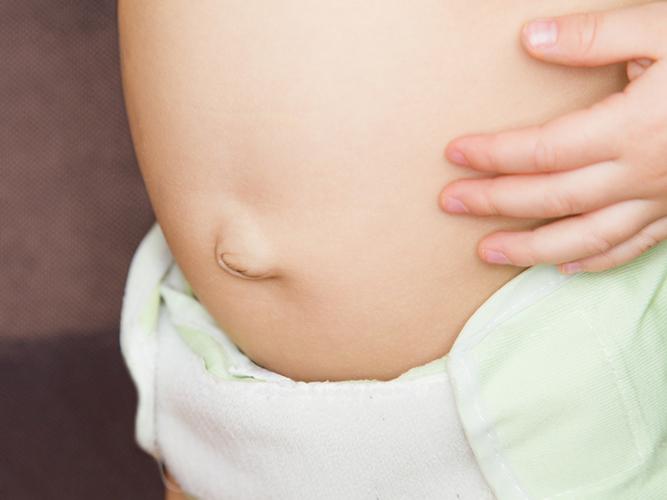
Most of us have come across cases of hernia in ourselves or someone we know. It is the condition where an internal organ pushes through the weak spot in your muscle or tissue. An umbilical hernia is a type of hernia where a part of the intestine or other abdominal tissues bulges through the opening in your abdominal muscles near the belly button. It is mostly seen and is common in newborns and infants. It can, although rarely, affect adults as well.

What Causes Umbilical Hernia?
Umbilical hernias, as mentioned, mostly affect babies and sometimes adults. In the case of newborns, during the gestation period or when the foetus develops inside the womb, a small opening in the baby’s abdominal muscles is made for the umbilical cord to pass through. In normal cases, either around the time of birth or right after birth, this opening closes. An umbilical hernia occurs when the muscles in the abdominal muscles don’t join together completely or when the opening doesn’t close on its own.
When it comes to adults, too much abdominal pressure can cause umbilical hernias. The main reasons for this pressure are mostly obesity, multiple pregnancies, fluid in the abdominal cavity, history of abdominal surgeries, long-term peritoneal dialysis to treat kidney failure, etc.
While understanding the specific risks of umbilical hernias is crucial, it is equally important to adopt lifestyle habits that address how to prevent hernia development in general, such as maintaining a healthy weight, practicing proper lifting techniques, and strengthening abdominal muscles to reduce the persistent internal pressure that often leads to various types of protrusions.
What Are The Symptoms Of Umbilical Hernia?
A small lump or a bulge or swelling near the navel, which is more visible when the baby is crying, coughing, laughing, etc. is the most evident symptom of umbilical hernia. This condition is usually painless for babies. However, it can cause discomfort and pain in adults.

What Are The Treatment Methods Available For An Umbilical Hernia?
In most cases, especially when it comes to babies, treatment is not necessary as umbilical hernias self-resolve by the age of 1 or 2. Some doctors are able to push the bulge back in the abdomen during the physical examination. However, if the bulge starts getting bigger or grows after the age of 1 or 2, surgeries are recommended. Only a specialised doctor can advise you with the best treatment option. That’s why it is important to consult a hernia specialist in Bangalore for treatments.
Similar is the case with adults too. It is best advised to go for surgery in a hernia hospital in Bangalore if you are experiencing any of the above-mentioned symptoms. SMILES Hospital is the best hospital in Bangalore for Hernia treatment. SMILES offer minimally-invasive, virtually painless, laparoscopic hernia surgery In Bangalore at an affordable cost with proper care and attention.
Don’t live in doubt! Visit the best doctor for gastroenterology in Bangalore at SMILES today! Smiles Gastroenterology Hospitals aim at taking away unnecessary pain and concerns from your life and help bring a smile to your face!

Dr. Pavithra A is a Senior Colorectal Physician at Smiles Institute of Gastroenterology with over 14 years of clinical experience. Specializing in conditions like piles, fissures, and fistulas, she is particularly recognized for her expertise in treating colorectal issues in women and during pregnancy. Based in Bangalore, Dr. Pavithra is known for her empathetic approach and commitment to providing ethical, patient-centric care for complex digestive and anorectal disorders.
- Dr Pavithra

- Dr Pavithra
- Dr Pavithra
- Dr Pavithra