
The term abscess may sound confusing, but it is a simple term for what is commonly called a
boil. An abscess can occur anywhere on the body, and when it forms in the rectal and anal
regions it is termed as a perianal abscess. It is a very common condition of the anorectal
regions, and has a recurring behaviour because of the way in which it is formed. While it
naturally may sound like an awkward topic to discuss even with your doctor, be assured that
it need not be so. Read this article for yourself to understand all about perianal abscess, how
their recurring nature makes treatment of perianal abscess without surgery ineffective, and
why visiting your doctor at the first sign of symptoms is the best decision you could take for
your health.
Can we live with a perianal abscess?
In majority of the cases, perianal abscesses mostly begin as superficial boil-like structures.
There are about 10 glands which line the anal opening. Glands by design, have a pore/hole
which they use for secreting their fluids. When this hole gets blocked by debris (faecal
matter/hair), there can be an active bacterial overgrowth. This causes pus collection into
pockets called abscess.
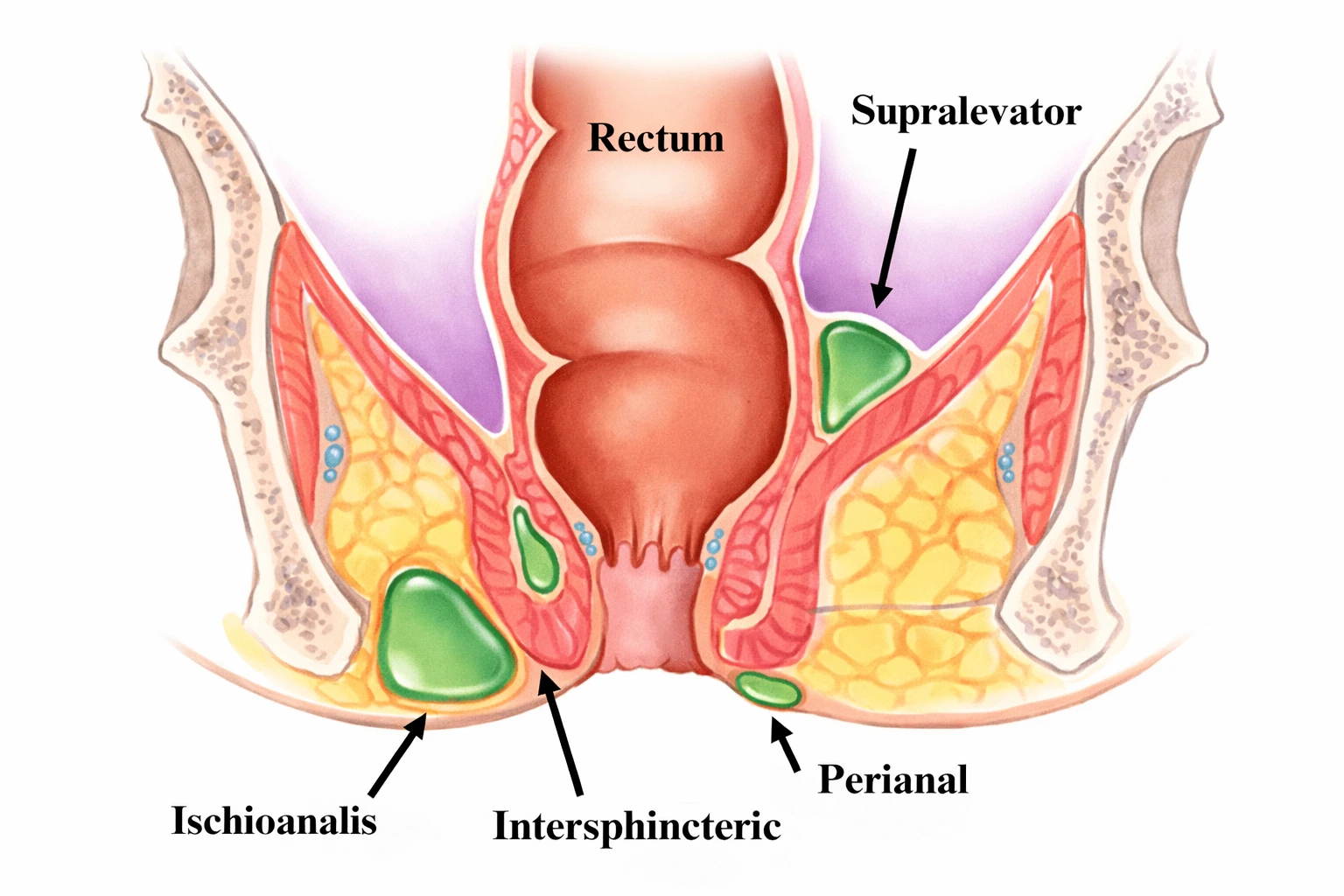
There are several other areas inside the anus where an abscess can be formed. But the one
we are talking about is superficial—meaning just below the skin surface. Due to their
superficial nature, they can sometimes burst and the pus drains out by itself. When this
happens, the intense pain often disappears instantly, leading many to believe the ‘boil’ has
healed.
For this reason, it is possible to live with a perianal abscess without getting too bothered by
it. In fact, almost about 30% of the people who come with symptoms of perianal abscess tell
of having felt similar symptoms multiple times in their past. These numbers alone tell that
many people do in fact live with perianal abscess—that is until it begins to affect their
quality of life.
If it is just a boil like structure, you may wonder if it should be taken seriously. Living with a
perianal abscess and hoping it would drain by itself may feel like the easier option but is not
advisable; it often leads to more complications. Read on to understand why it is best to get
treated early in the infection timeline.
How do I know if an abscess is serious?
It is a common question to wonder ‘if an abscess can drain by itself at times, how to know when it is considered “serious” and requires treatments’? The answer lies in understanding what exactly is happening at the perianal abscess site. As can be seen from above, perianal abscesses are generally formed as superficial pus collection pockets. These can burst and drain out, and it feels like everything is returned to normal. But if the pores of the glands continue to be blocked, the infection returns. This cycle can happen multiple times. The spaces contiguous to the glands and anal regions normally contain a lot of adipose tissue—also called fat. Fat regions by nature are well known to have low blood circulation, and can easily be pushed around to accommodate other structures. This means that the pus-filled pocket can easily expand into the fat regions and form deeper pus pockets. Low blood circulation in the fat tissues allows for faster bacterial growth in these deeper pockets. The infection is not just a superficial infection anymore. This is when a perianal abscess becomes a ‘serious’ condition requiring immediate treatment.
Here are some symptoms to know if your perianal abscess is serious:
- High Fever and Chills: A temperature above 101°F often indicates the infection is not
local to the anal region and is spreading through the body. - Malaise: A general feeling of being profoundly unwell, weak, or lethargic.
- Inability to Sit or Walk: if you feel that the pain becomes throbbing and intense, and
that normal movement is impossible, do visit the doctor at once. - Urinary Retention: Very rarely, if the abscess goes very deep, the swelling can press
against the urethra (tube through which the urine passes out), making it difficult to
pass urine. - Spreading Redness: If the redness on the skin is expanding away from the original
infection region, it is a sign that the infection is spreading through the soft tissue. - Skin Necrosis: Any darkening, turning purple, or blackening of the skin over the
abscess site.
If you observe any of the symptoms, visit a good colorectal specialist for physically draining
the perianal abscess to help you recover.
What happens if you leave the perianal abscess untreated?
When the abscess recurs multiple times, it can go deeper into the surrounding tissues. Even deeper abscesses can rupture, causing the fluid to drain out. But deep pus pockets mean it cannot drain out effectively, causing recurrences. Antibiotics also may not reach these pockets effectively, as they are within the fat tissues with low access to blood circulation.
There are two main conditions which can develop from a ‘serious’ perianal abscess.
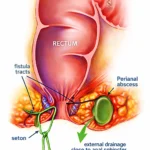
1. Fistulas: These are tube-like connections from the pus pockets to the skin surface made by the body to drain infectious fluid out. Fistula tubes often remain as such inside the buttock regions, causing intense pain and recurring infections. Treatment of fistulas cannot happen naturally and always require invasive surgeries.
2. Systemic infection or sepsis: In case of immunocompromised individuals or people with lower immunity levels, the infection can become systemic (spread to the entire body through the blood), which can lead to sepsis—a life threatening condition.
Can a perianal abscess heal without surgery?
If a perianal abscess is superficial and small, it can rupture by itself. The pus then drains out, and the empty pocket might also heal naturally. However, only a few abscesses are so easy to deal with. Studies report that about 10–15% of abscess recur even after treatments. These recurrences are linked to fistula formations. There is also another very significant number to evidence why a doctor is needed for a perianal abscess treatment: up to 50–70% of patients who got the perianal abscess drained professionally, experienced complete healing from the abscess.
Very few abscesses come in the natural healing category. And here is why:
- Most abscesses start from within the anal glands. You may notice healing on the skin
surface, but the residual infections in the glands do not completely go off unless
opened and treated. - Even if an abscess bursts on its own, it does not completely drain out, leading to
fistula formations. - The surrounding fat tissue layers do not help in containing infection. Instead, the
abscess can easily push through the fat to become deeper, and inaccessible to non-
invasive treatments.
For these reasons, medically it is considered very rare and sometimes even risky to cure a
perianal abscess without surgery.
How long will a perianal abscess drain?
A perianal abscess can drain only sometimes by itself. In most cases, a colorectal surgeon can easily treat your perianal abscess without surgery; in this case, the drainage and healing timelines are much more predictable.
When a perianal abscess drains by itself:
Sometimes, you may feel a sudden burst of liquids from the painful boil-like site near the anus. Doctors also in certain cases can leave an abscess to drain naturally—like when the patient is on blood thinners for cardiac co-morbidities. In these instances, the timeline for drainage maybe very unpredictable, but can be as follows:
- During the rupture: there is gush out of fluids, a relief in pain, and drainage of blood
and pus. - First Few Days: The wound continues to drain out liquids.
- 1–2 Weeks: the swelling reduces, and drainage reduces.
- 3–4 Weeks: Healing of the cavity, though the area may still be tender.
However, this is very rough timeline, and in most of the handful of times this happens, the
cure is not complete. 50% of these abscesses are reported to turn into fistulas. The drainage
also happens incompletely several times, which causes reinfections.
When the abscess is drained by a professional colorectal surgeon:
An experienced colorectal surgeon can easily treat your abscess by creating a tiny nick in the site of infection, after which the pus and fluids drain out. The timelines here are much more certain, and the recurrence rates are also very less. This is mainly because the doctor ensures the infection is completely cleared out.
- Active Drainage: Significant drainage happens for the first 24–72 hours after the
procedure. - Tapering Off: The discharge usually goes from thick pus to a thinner, pinkish fluid
over the next 1–2 weeks. - Complete Closing: Most simple surgical wounds heal and stop draining fully within
3–4 weeks, unless there are complications like a fistula formation.
Is perianal abscess cancerous?
A perianal abscess is not cancerous by itself. Since the abscess is a pus-filled pocket from
infection and not a malignant growth of cells, perianal abscesses are limiting and not
cancerous.
However, studies explain that tumours in the anorectal regions can show similar symptoms of anorectal infections, and this leads to their misidentification as abscess or fistulas. Only in extremely rare cases, can a fistula or perianal abscess undergo a malignant change, making it cancerous. Thus, as a rule of thumb, any persistent, recurring, or non-healing abscess should be evaluated by a specialist to rule out underlying malignancy. While a perianal abscess seems like any other painful “boil,” it is best not to be taken lightly. If left untreated, the infection can spread through the surrounding fat and muscle, leading to chronic complications like fistulas or, in severe instances, life-threatening systemic sepsis. The good news is that an early visit to the best colorectal specialists prove to be highly effective, providing rapid relief and preventing these deeper complications. Don’t let embarrassment stand in the way of your health—professional care is the safest and fastest route to recovery. If you are experiencing pain, swelling, or discomfort, Smiles Gastroenterology Centre, Bangalore is the best place to provide discreet, specialized, and effective treatment tailored to your needs. Come, take the first step towards healing today.

Dr. Parameshwara CM is a global authority in Coloproctology and the visionary founder of SMILES Hospitals, with an extraordinary track record of over 50,000 successful surgeries. A true pioneer in the field, he was the first to introduce Advanced Laser Piles Treatment and sophisticated procedures like LIFT, VAAFT, and STARR to Karnataka, revolutionizing the way digestive disorders are treated. He combines surgical precision with state-of-the-art laser technology to offer bloodless, minimally invasive solutions. Call us: +9108099008800 for further help.
- Dr Parameshwara CM

- Dr Parameshwara CM
- Dr Parameshwara CM
- Dr Parameshwara CM