

Piles are a very common anal and rectal condition caused by swollen veins in the anus. Nearly 4 in 10 Indian adults experience piles, with numbers being higher in the urban areas. The swollen veins can cause sharp pain and discomfort when under strain—like while sitting or passing bowels. Many people report a significant reduction in the symptoms when the swelling reduces.
Avoiding (swollen veins) the formation of piles, helps to avoid the discomfort, pain, and irritation which comes along with it. Reversing its causes like constipation, reducing ultra-processed foods, sedentary activities, help to significantly lower the risk of piles formation. This article will guide you through easy but effective tips on how to avoid piles, so you get to keep your confidence and health always bright.
How do you prevent getting piles?
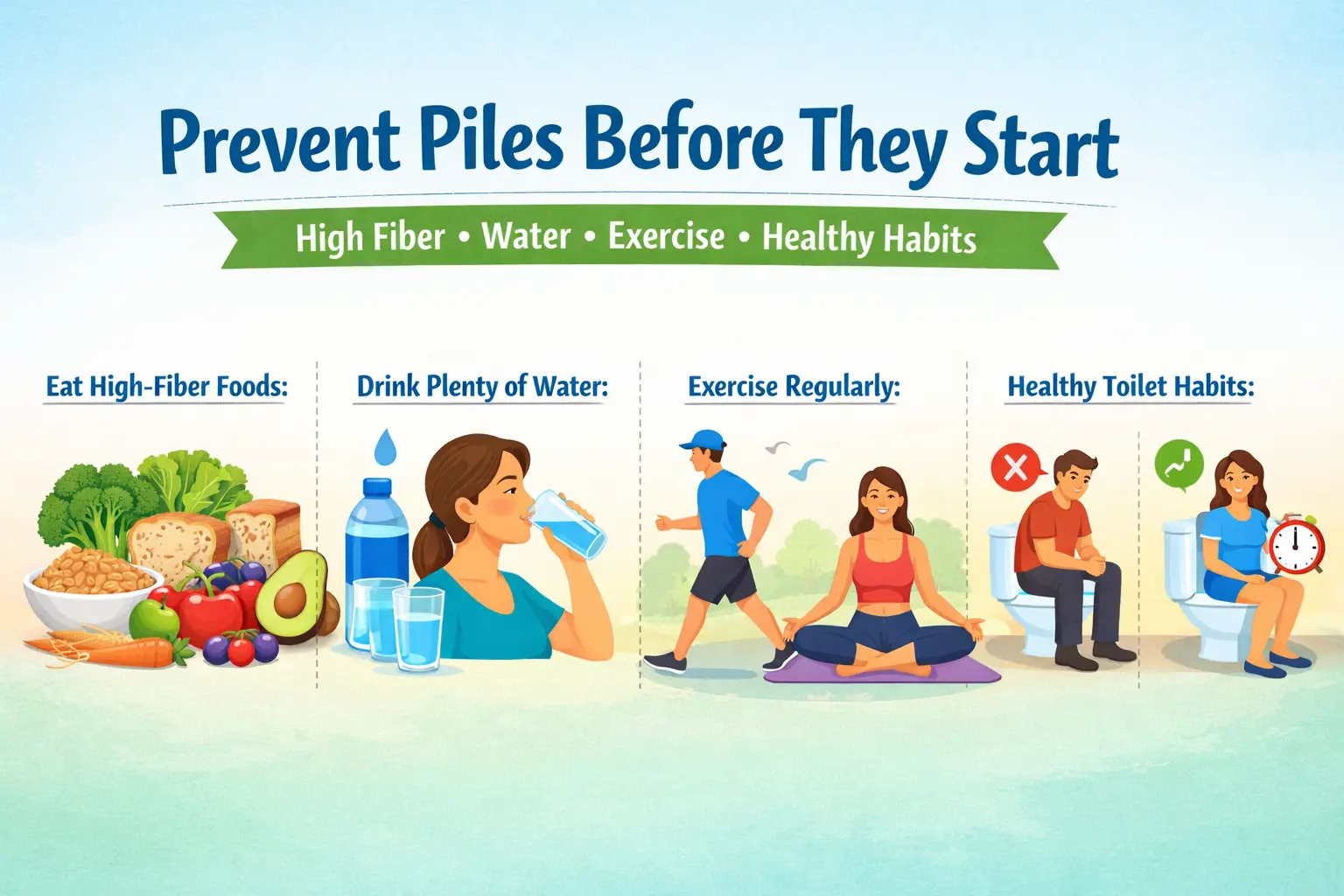
Piles is majorly a lifestyle disorder. Poor eating habits, inadequate hydration, and poor bowel health are the three major causes of piles. The good news is they are largely preventable with consistent changes in your daily routine. Here are some simple yet powerful, science-backed tips to help you prevent piles.
- Choose fibre-rich diets daily: Fibre is the often under looked part of the diet which can keep things smooth and easy.
Why it works: Fibre is the indigestible part of the plant foods we eat. They lack nutritional content, but are solely responsible for keeping your stools soft by adding bulk to them.
- Drink enough water daily: Hydration is as important as fibre intake to keep stools soft. Water helps on many levels—it hydrates the intestines for good digestion, keeps the good gut microbes flourishing, and keep stools super soft.
Why it works: The fibre absorbs water to form a gel-like material which helps you to avoid any strain while passing stools. Fibre without water forms hard cement-like stools.
- Avoid any episodes of constipation: By intentionally including the above two tips, constipation (very hard stools) can be easily avoided. Avoid delaying bowel movements too, and go when you get the urge.
Why it works: hard stools inevitably will make you strain when using the toilet. Regular straining can put pressure on the veins which makes them swell and result in piles.
- Maintain healthy bowel habits: Habits like not sitting on the toilet for too long, not straining to pass stools, and keeping a good toilet posture (keep feet slightly elevated with a small stool) all help to avoid piles.
How they work: Sitting on the toilet for long and exerting strain puts significant pressure on the anal veins. Over time, this makes them bulge and hang out as piles.
- Avoiding sedentary lifestyle: Lack of movement due to either just lying down for long or jobs which require sitting for long periods, can increase the risk of piles. Taking short indoor walks every hour or so, exercising for about 180 min a week greatly helps to avoid piles.
Why it works: Sitting for long puts constant pressure on the anal veins, making them bulge. Relieving this pressure—even if for a short time, stops the swelling from progressing.
How can I reduce piles naturally?
If you already have piles, there is no need to worry. There are many easy and effective measures you can take to help reduce piles naturally from the comfort of your home. Many of these methods focus on shrinking the bulge or swelling of the veins, reducing the irritation and itchiness in the skin without having to use any medical interventions. When followed consistently, these methods can significantly control your symptoms and even prevent them from progressing.
- Incorporate fibre into your diet, but do it gradually. Piles often result from passing hard stools frequently. To soften the stools, you can incorporate more vegetables, fruits, and whole grains into your diet. Aiming for a full 30grams of fibre per day can be difficult to digest all at once, and it can cause stomach pains, and bloating. Gradually habituating your body to digesting small amounts of fibre initially, and building up to the daily 30gram requirement is the most efficient and healthy way this habit can be followed consistently.
- Stay well hydrated. Drinking at least 3litres of water per day, will help in softening fibre in the stool to make it soft and easy to pass without straining.
- Take warm sitz baths. Sit in a sitz tub with warm water thrice daily for at least 15 minutes to reduce piles naturally. This helps relax the anal muscles and reduce the swelling. Using Epsom salts is an added bonus to help your muscles relax.
- Use OTC (over-the-counter) stool bulkers. These syrups or powders contain high amounts of insoluble fibre which can help in adding volume to your stools.
- Use natural soothers. Everyday skin soothers such as Vaseline, pure coconut oil, or even pure aloe vera gel can really help in healing the anal skin. These work mainly by helping the skin heal, and reduce the itchiness.
- Use laxative medications after consulting with your doctor.
Do piles go away naturally?
Piles are majorly a lifestyle-related condition. It results from regularly opting poor dietary choices, and a sedentary routine. However, this does not mean they are permanent. Many scientific studies report a positive correlation between consistently eating a high fibre diet, adequate hydration, regular physical activity, and healthy toilet habits to significant shrinking in swollen veins, relief from pain and discomfort. So, yes, piles can reduce as naturally as they were formed. The key lies in long-term consistency rather than using temporary measures.
Which food is best to avoid piles?
For aiming to avoid piles, look for food types which have a good fibre content. The main aim here is to avoid constipation. Certain foods which are naturally low on fibre, have a dehydrating tendency, or irritate the anal lining are more likely to result in piles. Avoiding these foods helps to keep the bowel soft, and easy to pass—which ultimately means less strain on the anal veins. There are many pre- and pro-biotic foods which can also strengthen the gut to help efficient digestion and thus, to avoid piles altogether.
Some best foods you can choose to avoid piles are
- Fruits with their skin: fruits like plum, apple, pear, grapes, berries, and figs can be easily eaten with their skin. Aim for an overfilled bowl of mixed fruit each day to help avoid piles and reduce piles flare ups.
- Vegetables: all leafy greens, carrot, cauliflower, pumpkin, and all gourd types add plenty of bulk to the stools.
- Legumes and pulses: this category is a bonus. They provide ample protein along with fibre. Rajma, kabuli & black channa, green gram, all the dals greatly help to improve gut health.
- Cooked foods: all fermented foods like idli, dosa, curd/dahi, buttermilk are excellent for keeping up the numbers of good gut bacteria. These bacteria make your digestion very efficient, which in turn means healthy and soft stools.
Is exercise good for reducing piles?
The digestive organs in your abdomen are mainly small intestine and the large intestine. Most digestion and nutrient absorption happen in the small intestine, whereas the large intestine is where all the solid waste (poop), gets collected to be pushed out of the body. The waste is pushed out through natural wave-like movements of the large intestine called peristalsis.
Sedentary activities, lying down for long periods, and sitting for too long slows peristalsis. This leads to sluggish bowel/intestinal movements, and the solid waste gets deposited over time to form hard stools or constipation.
Many studies have shown the positive effect of exercise on reducing piles. Physical activity and certain types of exercises naturally support the wave-like movements of intestines. This improves bowel regularity and prevents stool from remaining in the colon for too long. The stools stay softer, reducing constipation and the strain that contributes to piles.
You can try some simple exercises like brisk walking, light jogging, yoga and stretching, pelvic floor–friendly exercises. Remember to avoid heavy weight lifting if you are experiencing piles symptoms. Weightlifting puts extra strain on the pelvic floor muscles which can form/worsen piles.
What to drink to prevent piles?
Adequate hydration is a very important key to prevent piles. Hydration plays an important role to keep the stools soft and bowel movements regular—both of which are important to prevent piles and its symptoms.
Most of the time, we think of hydration as only water intake. While water is crucial, there are several other liquids which are equally hydrating to maintain good gut health. Afterall, options help to keep the hydration game interesting! Here are some interesting liquids other than water to up your hydration for the day.
- Buttermilk (chaas): supports gut health and digestion.
- Coconut water: hydrates naturally to help maintain fluid balance and supports bowel regularity.
- Herbal teas: mild herbal teas such as jeera, ajwain, or ginger tea help digestion and reduce bloating.
- Fresh vegetable juices (with fibre): juices made from vegetables like bottle gourd or carrot, without straining, help add hydration and fibre.
- Fruit juices: along with the skin when it can be consumed. Pro tip: do not add sugars, it is not very supportive of gut health.
How to avoid piles? It is all about consistently supporting habits that support a good gut health. Very simple lifestyle measures like eating enough fibre, staying well hydrated, keeping your body moving, and following healthy toilet habits can go a long way in protecting your digestive health. By following these mindfully, and consistently, piles can often be avoided before they ever become a problem.
