

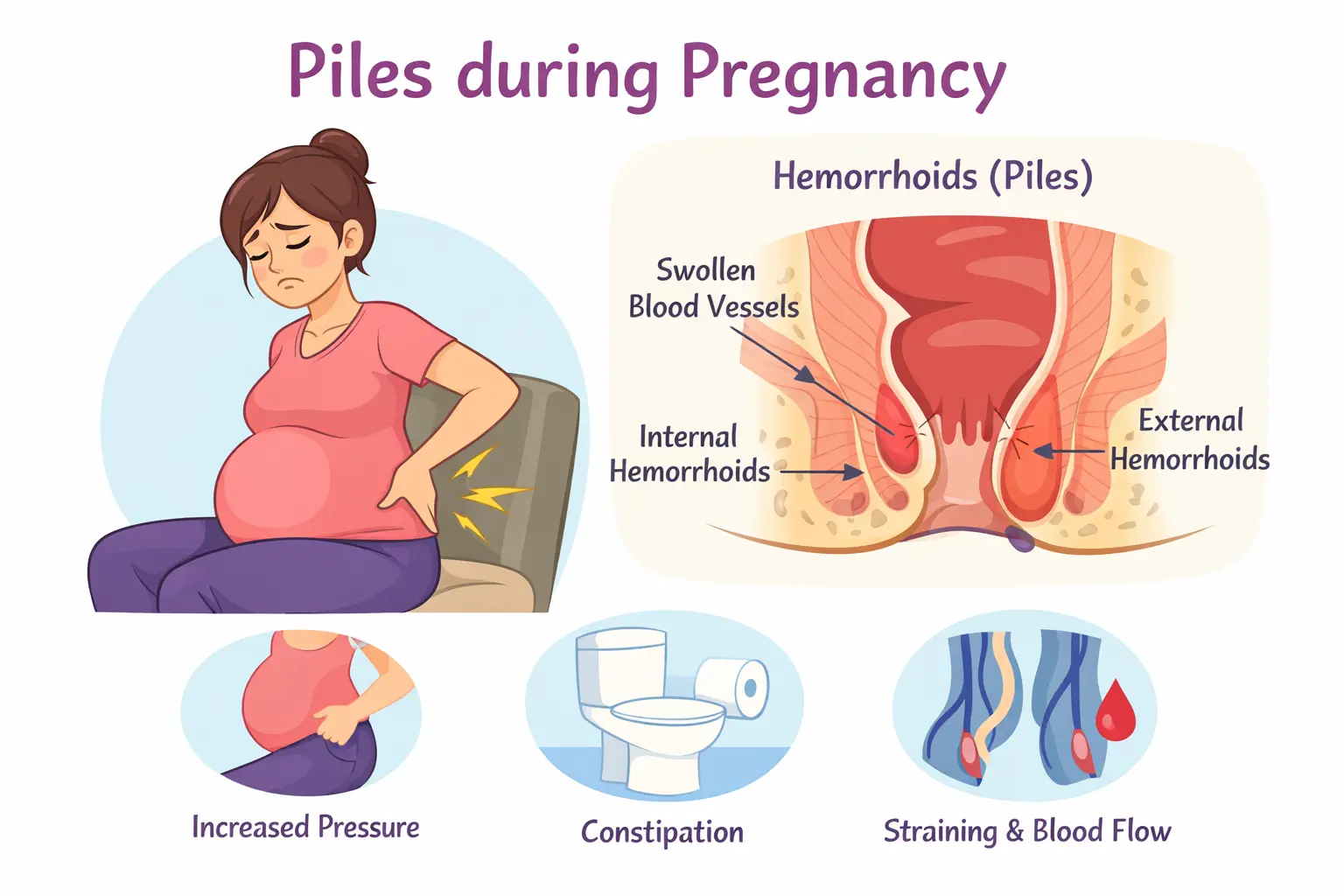
Piles is an anus and rectal related condition which is very common and normal. In fact, approximately 50% of the Indian population face piles by the time they reach 50 yrs of age. The prevalence is more in urban areas mainly because of lifestyle changes, and sedentary work habits. Women are more prone to piles generally during pregnancy, after child birth and during extreme hormonal changes in the body. A good understanding of what causes piles in females, what does female piles looks like, and how to cure piles in women will greatly help as a first step for relieving discomfort and achieving complete recovery.
What causes piles in females?
Women or females experience piles generally in and around the reproductive period, particularly around pregnancy and childbirth. Causes of piles in females are the several risk factors associated with these conditions. Pregnancy and childbirth naturally make the veins in the anal and rectal (anorectal) areas to swell up. Swollen veins in the anorectal area are medically termed as haemorrhoids—or informally as piles. Some of these causes are:
- Pregnancy: During pregnancy, the uterus increases in size to make place for the growing baby. This and the added weight of the baby puts significant and constant pressure on the veins in this area, causing them to swell and resulting in piles in women.
- Hormonal changes: There are many hormonal changes happening during pregnancy. Among these, the sharp rise in progesterone levels plays an important role in the development of piles. Progesterone can cause veins to relax, which means they can also swell easily.
- Constipation: Constipation is the condition of having hard stools. This can be caused by unhealthy lifestyle choices, and during pregnancy by high progesterone levels. High refined food intake, reduced physical activity, and iron supplements prescribed for supporting the pregnancy cause constipation. Pushing out the hard stools increases the pressure on the veins. This results in pain, and discomfort—the major symptoms of piles in females.
- Childbirth: The process of a natural birth puts tremendous strain on the veins in the pelvic floor. This strain can worsen existing piles in females and even form new ones.
- Lifestyle factors: Sedentary jobs which require hours of sitting are on the rise, and so are the number of piles cases for women outside the reproductive phase too. Sitting causes strain on the rectal area veins. Sedentary activity combined with reduced natural fibre intake, and hydration are in general, the major causes for piles in women.
- Genetic factors: Women with a family history of piles may be at a higher risk, since genetic factors can influence how strong and flexible their vein walls are.
What do female piles look like?
Piles are nothing but swollen veins in the rectal (just above the final anal hole) and anus area. They swell because of many reasons as explained above. In women, piles can be
- Felt as a soft or swollen lump near the anus: These may be felt as small bumps outside the anal opening (external piles)—when you gently touch the anal hole, or may not be visible but cause discomfort inside (internal piles).
- Can be felt as itchy or irritated skin around the anal area: you may feel that it is inflamed, and can feel itching or irritation specially after you have been to the toilet.
- Bleeding—you can either notice blood in the toilet or on the toilet paper, or observe mucus discharge in the stools.
Can piles go away naturally?
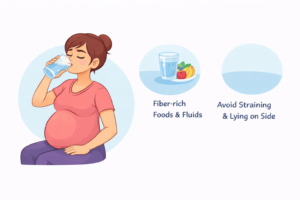
With advancements in medical technology, there are several treatment options for piles in women. However, it is completely natural and understandable for many women to feel hesitant about seeking treatment at a doctor’s office. The good news is, piles can go away naturally, when the right corrective measures are taken. Below are some effective, and science-backed tips to help with improving the symptoms of piles in women, ultimately aiming to help the piles go away naturally. These tips work by shrinking the swelling or bulge of the veins, thus improving the overall piles condition.
- High-fibre diet coupled with adequate hydration: these two steps alone will take care of majority of the piles symptoms in women. Fibre is the insoluble part of many natural foods like fruits, whole grains, and vegetables. The sole purpose of this is to add volume to the stools to make them soft. Water acts to hydrate this fibre mesh to make it sot and gel-like. So, remember to take plenty of both fibre along with water to easily pass stools without straining the rectal veins.
- Use sitz baths: a sitz bath is a small tub which can fit over your toilet seat. You can fill it with warm water and soak the anal area in it for thrice a day for 15 minutes. Using a sitz bath regularly when you experience piles symptoms, can speed up the piles go away naturally by improving blood flow to this area.
- Use OTC ointments and creams: these are ointments which can be applied on the anal area. They contain ingredients like hydrocortisone or witch hazel to help reduce swelling, pain, and itching in the rectal regions.
- Increase physical activities: movement of the body stimulates your bowels or intestines to keep up their natural wave-like motion. This motion is very important as it helps the solid waste to move efficiently through the intestines and out of the body.
- Use lubricants like coconut oil and Vaseline: these do not work to shrink the piles, but can act as natural lubricants to help the stools pass smoothly through the anal canal. They also act as a protective barrier on the skin to reduce friction and burning.
What is the fastest way to treat piles?
Sometimes, even after following rigorous lifestyle changes and using OTC medications, the piles symptoms in females can repeat or cause multiple flare ups—and this is completely normal. Studies suggest that nearly one in two women experience recurrent or persistent piles symptoms at some point, especially during the reproductive years.
Thus, there is no single fastest way to treat piles. Depending on your history, lifestyle, or presence of other conditions, the fastest way to treat piles will also vary accordingly. However, here are some strong points to help you find the fastest way to personalise your treatment for piles.
- Seek early care from a colorectal expert: Piles is one of the most common colorectal conditions which a colorectal expert encounters on a daily basis. You can look around your area for a doctor whom you are comfortable with to seek expert advice on piles. Consulting a qualified proctologist at the earliest ensures accurate diagnosis and fast, targeted relief before symptoms worsen.
- Use doctor-recommended medications: A doctor can personalize your treatment using a combination of natural remedies and specific medications. This personalized combination can work much more effectively than using general OTC medicines.
- Treat pregnancy-related or post-delivery piles promptly: Early intervention will prevent piles from worsening. Early-stage piles can be cured with just medications and lifestyle remedies rather than any procedures. Thus, you can recover in the comfort of your home during the physically demanding period.
- Take after-care seriously: Consistently following doctor-provided tips speed up healing, and significantly reduce recurrence.
- Do not be scared of any suggested procedures: Most piles procedures today are minimal, safe, and designed for maximum comfort. Treatments like rubber band banding or sclerotherapy offer fast relief from symptoms with minimal discomfort and downtime. Laser treatments nowadays are very precise, and can offer highly effective results with less pain, minimal bleeding, and a faster recovery. All these procedures are performed as outpatient procedures, making it very ideal for all women.
How to cure piles 100%?

Piles in women can be cured completely when your treatment is chosen based on the type and severity of your condition. Other factors lie lifestyle, activity levels, and history are important to be considered during curing symptoms of piles in females. Early-stage piles often get cured with lifestyle correction and medications. Advanced or recurrent piles may require minimally invasive or laser procedures for permanent relief. Always addressing the root causes—such as constipation, straining, and prolonged sitting is most important to prevent recurrence. Remember, the key is to access timely medical care and proper follow-up. These two points often are the most effective in helping many women to cure piles 100%.
Easy access to expert colorectal care could not be easier than giving us a call on +91 – 8081998800 for accessing high quality consultations with top gastro and colorectal consultants at any of the Smiles Hospitals, Bengaluru. Our experts truly believe in kind and personalised care, and the hospitals focus solely on gastro- and colorectal care. These two aspects alone will ensure that you leave with a confident smile.